



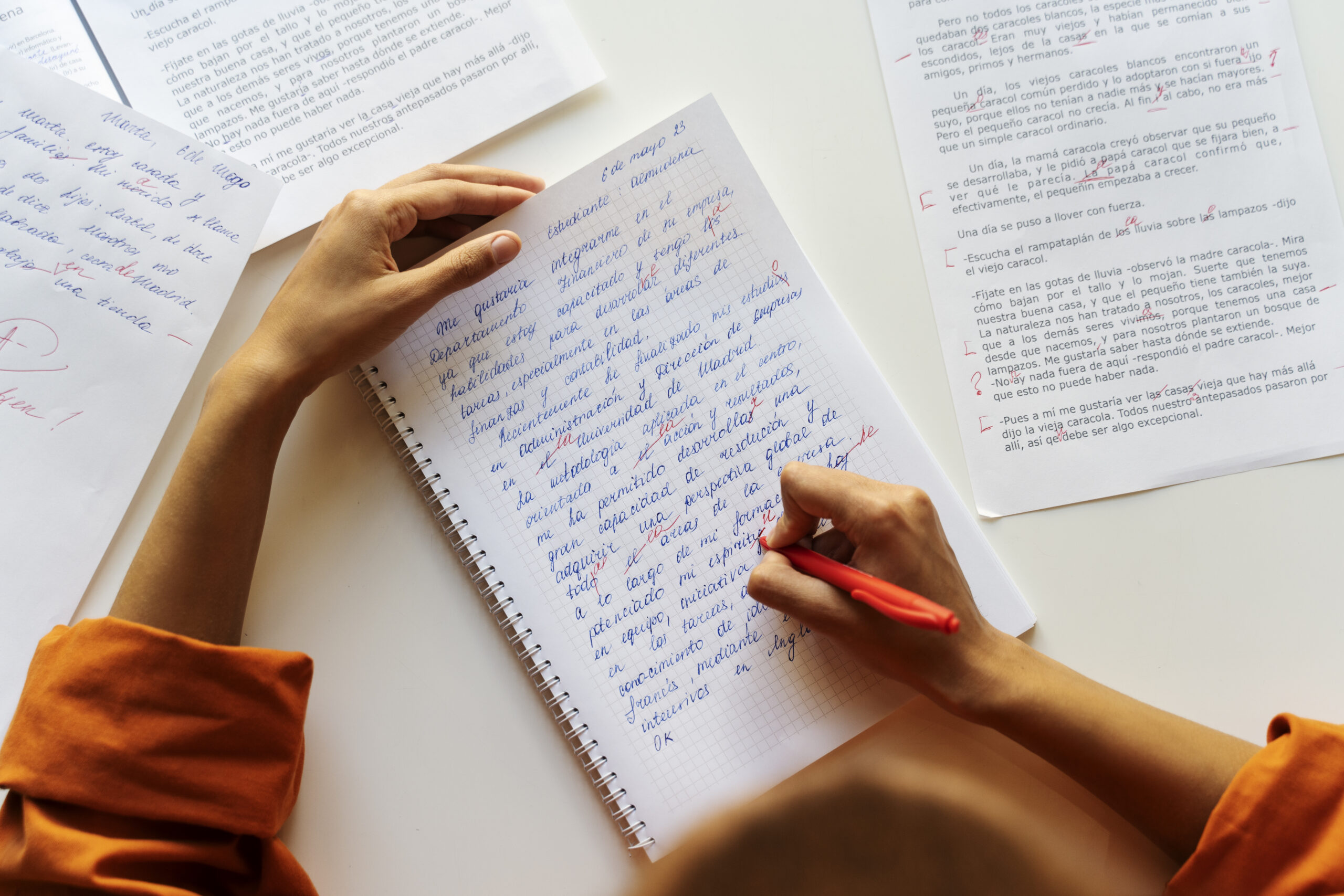




If You’re Still Revising Like This, You’re Losing Marks
You’re not losing marks because you don’t study. You’re losing them because you’re revising the wrong way. Let’s be honest, most students aren’t underprepared. They’re misaligned.
If your revision still looks like highlighting textbooks, rereading notes, and hoping it “sticks,” you’re not just being inefficient; you’re actively capping your grades. This isn’t about working harder. It’s about aligning your revision with how IGCSE and IB actually reward answers.
1. You’re Revising Content, Not Skills
IGCSE and IB are not memory tests. They are application-based assessments. Yet many students revise like this:
- Rewriting notes
- Memorising definitions
- Reading model answers passively
Here’s the problem: examiners don’t award marks for what you know; they award marks for what you do with what you know. For example:
- In IB Lang Lit Paper 1, you don’t get marks for spotting techniques; you get marks for analysing their effects.
- In IGCSE Literature, you don’t get marks for knowing the plot; you get marks for interpreting meaning and the writer’s methods.
YS Fix:
- Shift from content revision → skill drilling
- Write full paragraphs under timed conditions, where every sentence links back to the question
- Train yourself to answer the question, not just understand the text
2. You’re Being Descriptive Instead of Analytical
This is the most common reason students plateau in the mid-band. If your answers sound like:
- “The writer uses imagery…”
- “This shows that…”
- “This creates interest…”
You’re likely describing, not analysing. Examiners see this constantly. It leads to feedback like:
- “Too descriptive”
- “Lacks depth”
- “Does not fully explore the effect”
YS Insight:
Analysis = Technique + Effect + Why it matters (in relation to the question).
Without that third layer, you’re stuck in Band 4–5.
3. You’re Ignoring the Question (Without Realising It)
You think you’re answering the question—but you’re actually writing everything you know about the text.
A very real mistake students make:
They start analysing everything they know about the text instead of selecting only what answers the question.
This is especially dangerous in IB:
- You start with the question
- You bring in every theme you remember
- You end up with paragraphs that sound smart but don’t actually answer what was asked
This is exactly how strong students lose marks in Criterion A and B.
YS Fix:
Before every paragraph, ask:
How does this directly answer the question?
If you can’t answer that in one sentence, the paragraph is off-track.
4. You’re Practicing Without Feedback
Doing past papers is good.
Doing them without feedback is a waste of time.
You might be:
- Repeating the same mistakes
- Reinforcing weak structure
- Thinking you’re improving when you’re not
This is why students say:
“I’ve done so many papers, but my marks don’t change.”
YS Insight:
Improvement doesn’t come from repetition.
It comes from correction + awareness + adjustment.
Even one properly reviewed answer is more valuable than five unchecked ones.
5. Your Structure Isn’t Helping You Score
You may “have a structure,” but is it helping the examiner give you marks?
Common issues:
- Weak topic sentences
- Paragraphs that drift
- Conclusions that introduce new ideas
- No clear line of argument
In IB, especially, this affects Criterion C (Organisation) heavily.
YS Fix:
Every paragraph should:
- Directly answer the question
- Present a clear idea
- Support it with evidence
- Analyse why it matters
If your paragraph can’t be summarised in one clear argument, it’s not exam-ready.
6. You’re Writing Too Much, Not Too Well
Many students think:
“More writing = more marks”
Wrong.
Examiners reward:
- Precision
- Clarity
- Relevance
Not:
- Repetition
- Over-explanation
- Vague phrasing
In fact, overly wordy responses often lose marks in:
- Clarity (IB Criterion D)
- Focus (Criterion C)
YS Insight:
Strong answers are not longer.
They are tighter, sharper, and more intentional.
7. You’re Not Studying Examiner Expectations
This is the biggest missed opportunity.
Mark schemes and examiner reports literally tell you:
- What top answers do
- What weak answers lack
- Where students lose marks
Yet most students never read them.
YS Fix:
Start thinking like an examiner:
- What is this question really testing?
- What would a Band 7 answer look like?
- Why would this answer lose marks?
Final Thought: Revision Isn’t the Problem Strategy Is
If you’re putting in hours and not seeing results, the issue isn’t effort.
It’s alignment.
IGCSE and IB reward:
- Precision over volume
- Analysis over description
- Focus over coverage
If your revision doesn’t reflect that, you’re not just staying in the same place you’re falling behind students who do understand the system.
The YS Takeaway

At Young Scholarz, we see this pattern every year: students working hard but still losing marks because their revision doesn’t match what the exam actually rewards. If you continue with passive methods, you’re not just staying stagnant; you’re actively reinforcing the habits that keep you in the mid-bands. The reality is simple: exams reward precision, analysis, and exam-focused thinking, not effort alone.
The difference between a 5 and a 7 isn’t effort. It’s a strategy.
If you don’t fix that now, you’re choosing to leave marks behind.