







No Path Is Wasted, It’s Only Waiting to Be Built On
If you’re choosing IB subjects right now, or staring at a UCAS form trying to pick a degree that will “set you up,” here is something worth sitting with: almost no one who has built something meaningful got there by a straight line. And that’s not a failure of planning. It’s simply how building a career actually works. I understand the pull toward certainty, because I once asked a version of that same question myself, and the answer I eventually arrived at came from a career that looked, for a long time, like a series of unrelated detours.
I trained as a biochemist and didn’t enjoy a day of it, yet it taught me to think in a way that has never left me: form a hypothesis, test it, and when the result surprises you, work out why. That habit carried me into chartered accountancy, then into auditing businesses across the UK, Europe and the Channel Islands, work that was itself a blend of tax, law, economics and accounting, and that taught me a lesson I still build on today: no part of a system works in isolation. It carried me into hospitality, in sales for the Oberoi Hotel Group, where I learned about service and about people in a way no ledger could have taught me. And it carried me, eventually and quite unexpectedly, onto the page, when I was asked to write a play and later a short film, and discovered I could take a story apart with the same instincts I’d once used to take apart a chemical reaction.
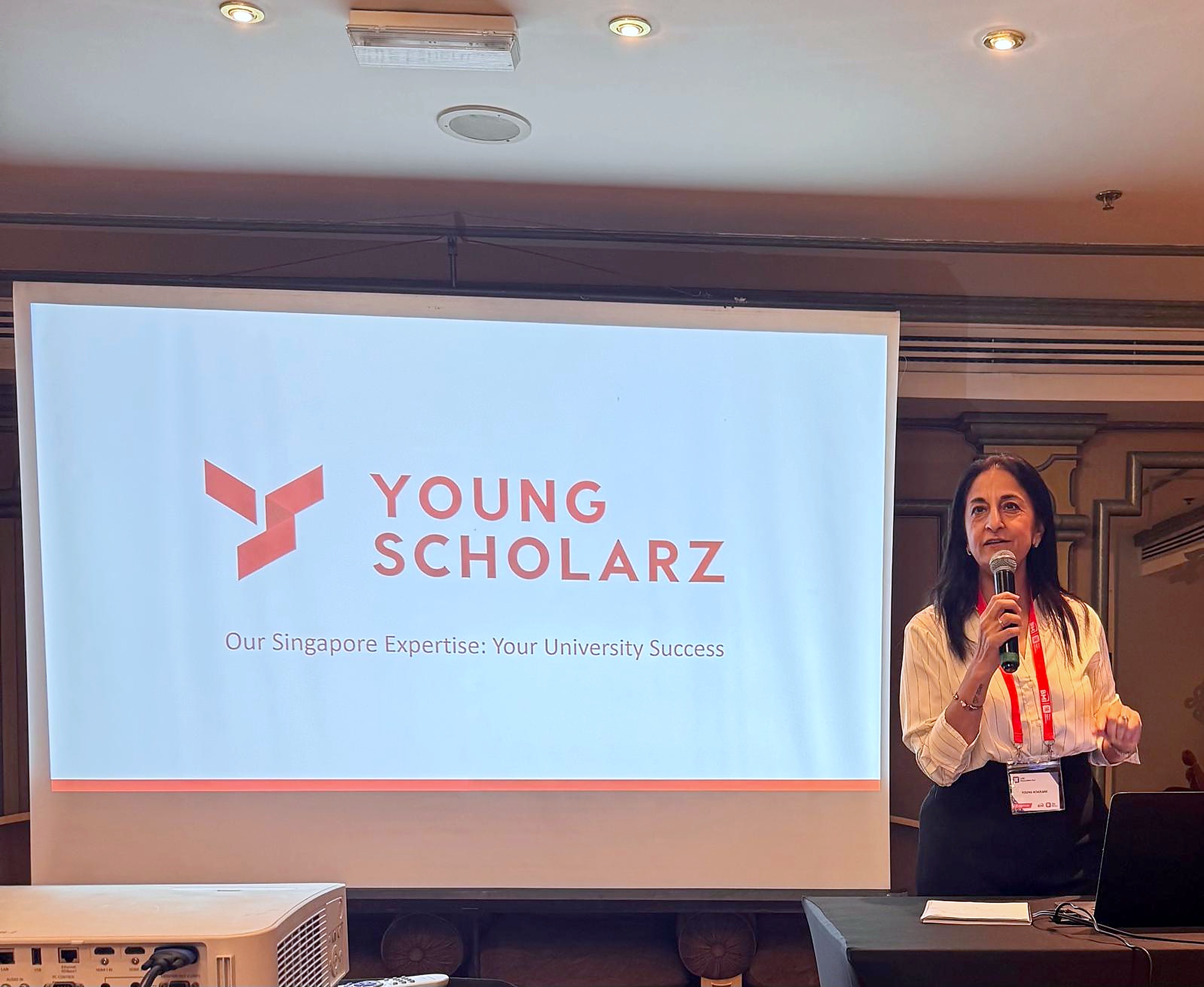
None of it was planned. I didn’t move from biochemistry to accountancy because the two connected, or from audit to hospitality because I’d mapped a route between them. I moved because opportunities appeared, and I paid attention to what each one was teaching me. By the time I founded Young Scholarz, I wasn’t just an English teacher with a business idea. I was someone who had learned, the hard way, that almost nothing is wasted if you’re willing to carry it forward, and that conviction is the foundation of how I advise every student who walks through our doors today.
Why This Matters More for Your Generation
A generation ago, the world was more forgiving of a straight line: pick a subject, pick a profession, follow it for forty years. That structure barely exists today, and for the students we work with, it will exist even less. AI is already reshaping which roles will still exist, let alone look recognisable, in ten years. Entire jobs are being created and made obsolete faster than a single degree can be completed.
The old model, choose the right course so you land the right job so you build the right career, is quietly collapsing. Not because students are choosing badly, but because the ladder itself is being rebuilt in real time. As an advisor, this is the single most important thing I try to get parents and students to internalise before we talk about a single subject choice.
What I’ve Learned From Watching This Up Close
That personal experience is one thing. Running an education company means testing it against hundreds of other students’ lives, and watching, years later, where they land. The pattern is consistent: the students who thrive aren’t the ones who picked the “correct” subject combination. They’re the ones who understood what each subject was actually teaching them, beneath its content, and carried that forward, exactly as I eventually learned to do with my own scattered path.
Economics teaches how incentives shape behaviour. Literature teaches how to read intention and structure beneath the surface of a text. The sciences teach hypothesis, evidence and revision. Accounting teaches how a system holds together, or falls apart, when one part stops communicating with the rest. None of these skills stay confined to the subject that taught them. A student who studies biochemistry and later moves into finance, sales or the arts hasn’t wasted the biochemistry. They’ve simply moved the underlying discipline, the habit of testing an idea against evidence and adjusting when it doesn’t hold, into a new setting.
This is precisely what I mean when I tell parents that a “wrong” choice is rarely as costly as it feels in the moment. The content may not transfer. The thinking almost always does.
The Question I Ask Instead
Most students are trained to ask, “is this the right path?” As an advisor, I’ve stopped answering that question directly, because there isn’t one right path anymore, and chasing it mostly produces anxiety rather than clarity.
The question I ask instead: “what will this teach you how to do?” Will it teach you to communicate under pressure? To notice patterns other people miss? To take something apart, understand its structure, and rebuild it differently? Subjects and courses that seem entirely unrelated to a student’s eventual direction can still answer that question well. What connects a seemingly scattered set of experiences into a coherent, capable professional is never the subject matter itself. It’s whether the student paid attention to what each experience was teaching them, and carried it forward rather than writing it off.
What This Means for How We Advise
This is the philosophy behind how Young Scholarz approaches counselling: we spend less time trying to engineer a perfect, risk-free sequence of choices, and more time helping students understand what any given path will actually build in them. That shift changes the conversation from anxiety management to genuine preparation.
In practice, this means a few things we do differently. We map what a student is actually good at doing, not just what they’ve studied, so a strength discovered in debate club or a part-time job counts for as much as a grade. We ask students to articulate, out loud, what a difficult experience taught them, because the skill only becomes usable once they can name it. And when a student wants to pivot, away from the subject we originally planned for, into something that looks unrelated, we treat that as data to work with rather than a problem to correct.
I’ve watched this approach change outcomes. A student convinced they’d “wasted” two years on a subject they’d grown to dislike, once helped to see the actual capabilities that subject had built, walked into university interviews and job applications able to explain their path as a coherent strength rather than apologise for it. That reframing, more than any single grade or subject choice, is often what separates a student who feels stuck from one who moves forward with confidence.
Students will very likely change direction more than once. Many will end up working in fields that don’t exist yet. That isn’t a failure of planning. It’s what building a career looks like now, for nearly everyone, and it’s a far more honest thing to prepare a young person for than the promise of a single correct route.
Every subject, every setback, every unexpected opportunity is a brick. A building doesn’t check where its bricks came from. It only needs them to hold. Nothing is wasted, as long as a student is guided to pick the brick up and use it, and that guidance, more than any single subject recommendation, is the real work of advising a young person well.
That is certainly what happened in my own path, and it’s what I now watch happen for the students we advise, once they stop apologising for the parts of their journey that don’t look linear, and start using them.