• info@youngscholarz.com
  • +65 97829419
Follow Us :
  • Login
  • /
  • Register
Young Scholarz
Young Scholarz
  • Courses
    • IGCSE
    • IB
    • American Curriculum
    • O/AS/A Level
    • School-Specific Curricula
    • Global Narratives- English Enrichment
  • Uni & Career Prep
    • College Counselling
    • Admissions Essays
    • Admissions Test Prep (SAT, GRE, GMAT, LNAT)
    • Language Exams (IELTS, TOEFL, etc.)
    • Career Counselling
  • Workshops
    • Events
    • Schedules
      • English Group Classes
  • Student Resources
    • Academic Counselling
    • Paper Marking
    • Blog
    • Mental Wellness
  • Beyond Academics
    • Profile Building
    • Life Skills Workshops
  • About
    • Our Story
    • Our CEO and Founder
    • Our Team
    • Our Faculty
    • Our Alumni
    • Student Testimonials
    • Social Responsibility
    • Work With Us
    • Contact Us

Blog

The Tinder Problem in Education By Sunita, Founder of Young Scholarz

Latest Blog

August 4, 2026

The Tinder Problem in Education

The tutoring industry has a Tinder problem. Open any of the major platforms and the...
Read More

Recent Releases

  • The Tinder Problem in Education By Sunita, Founder of Young Scholarz
  • The Tinder Problem in Education
  • August 4, 2026
  • The Danger of Copy-Paste Teaching By Sunita, Founder of Young Scholarz July 2026
  • The Danger of Copy-Paste Teaching
  • July 28, 2026
  • Why I Refuse to Compete on Price
  • July 24, 2026
  • AI Is Changing the Workplace: What IB Students Need to Learn Now
  • July 21, 2026
  • Categories

    No posts found.
    No posts found.
    No posts found.
    No posts found.
    No posts found.
    No posts found.

    Categories

    • IGCSE
    • IB
    • University
    • Extra Curriculars
    • Mental Health
    • Beyond Academics
    • Blog, IB, IGCSE, Mental Health, University

      Using Loci to Learn Effectively

      18 Nov 2022
      Blog, IB

      How to Write an IB Media Analysis Essay

      11 Nov 2022
      Blog, IB, IGCSE, Mental Health, University

      How Mind Maps Help You Study Better

      05 Nov 2022
      Blog, IB

      Top 7 Tips for the IB DP ToK Essay

      21 Oct 2022
      Blog, IB, IGCSE, University

      How To Write An Effective Conclusion

      14 Oct 2022
      Blog, IB

      IB Chinese Revision Tips

      07 Oct 2022
      News

      Congratulations to our IGCSE champs!

      21 Aug 2022
      News

      Congratulations to all our IB students!

      08 Jul 2022
      Blog, Extra Curriculars, IB

      Top 10 Summer 2024 Reads for Grade 12!

      06 Jul 2022
      « Previous 1 … 13 14 15 16 17 … 20 Next »
    Blog, IB, IGCSE, Mental Health, University

    Using Loci to Learn Effectively

    18 Nov 2022
    Blog, IB

    How to Write an IB Media Analysis Essay

    11 Nov 2022
    Blog, IB, IGCSE, Mental Health, University

    How Mind Maps Help You Study Better

    05 Nov 2022
    Blog, IB

    Top 7 Tips for the IB DP ToK Essay

    21 Oct 2022
    Blog, IB, IGCSE, University

    How To Write An Effective Conclusion

    14 Oct 2022
    Blog, IB

    IB Chinese Revision Tips

    07 Oct 2022
    News

    Congratulations to our IGCSE champs!

    21 Aug 2022
    News

    Congratulations to all our IB students!

    08 Jul 2022
    Blog, Extra Curriculars, IB

    Top 10 Summer 2024 Reads for Grade 12!

    06 Jul 2022
    « Previous 1 … 13 14 15 16 17 … 20 Next »

    What is the Method of Loci?

    “The method of loci (MOL) is a mnemonic device that relies on spatial relationships between “loci” (e.g., locations on a familiar route or rooms in a familiar building) to arrange and recollect memorial content.” In Latin, Loci means location or place. Now you may ask what is a mnemonic device or what are mnemonics. Well, mnemonics are basic strategies for encoding information with the sole purpose of making it more memorable. 

    In simpler terms, the method of Loci works by linking something you need to remember, to a location or place that is familiar to you. 

    We often think that we are bad at memorizing and remembering things. We can’t remember faces, we can’t remember names, phone numbers, etc. and we tend to forget what we have studied. This is true for people of different age groups. We envy people who have excellent memory power and imagine they are born geniuses or have some sort of magical skills.

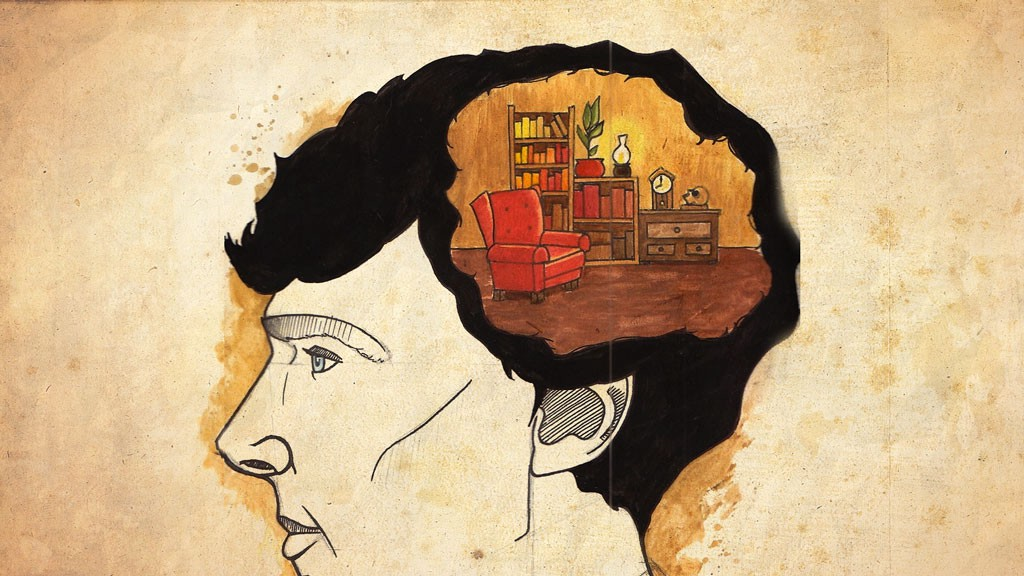
    Visualization of Sherlock Holmes' highly active and organized brain, showcasing the intricate neural pathways responsible for his brilliant deductive reasoning and exceptional memory. He is using Loci method.

    Take Sherlock Holmes, the brilliant detective, as an example. He effortlessly stores vast information, recalls details, and skillfully deduces solutions to complex mysteries. How does he do that? In BBC’s ‘Sherlock,’ the creators gave him an ancient Greek mnemonic device, aiding him in unraveling the most mysterious cases. That device is called The Mind Palace or the Method of Loci.

    Other names used are 

    • Memory Journey
    • Memory Palace
    • Journey Method
    • Memory Spaces
    • or Mind Palace technique.

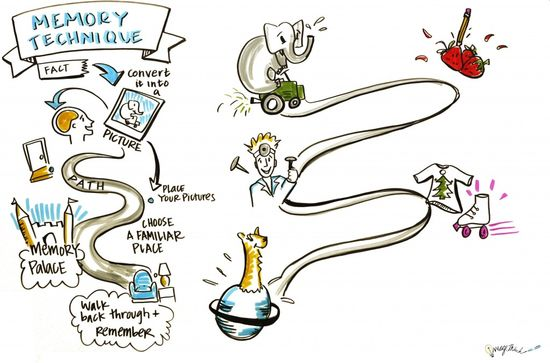
    Step-by-step visual guide to the Loci method, a memory technique. Highlights include selecting locations, associating items with those locations, and enhancing recall through spatial memory.

    How to use the Method of Loci?

    It might sound like a lot of work but once you grasp the method and follow the steps below, it will be easy to do. 

    Part I

    1. The very first step is to decide on the mind’s location. That is to think of a place you are very familiar with and that you can recreate easily in your mind. For example, it can be your street or a walk from the bus stand to your house or anything else.

    2. Then you have to walk around that familiar area (all in your mind, of course). 

    3. All you need along that area are a few set points that you can remember without having to think deliberately about. You already know that there’s always a zebra crossing, a mailbox, a specific shop, a tree, or whatever, just the things that you are very familiar with.

    4. Let’s say the first thing you have to remember is to take your silk dress to the dry cleaners and you have to do that the next day so you have to make a bizarre image of that thing.

    5. Imagine a glowing beautiful white dress, the glow is so much that you can barely look at it.

    6. Now you attach the image of the glowing white dress to the image of the mailbox. Imagine if someone has dressed up the mailbox in that dress.

    7. Making this bizarre image in your mind is very important and useful. This helps you to link the two images.

    8. Now you can forget about it and you don’t need to think about it until the next day or when you need it.

    Part II

    9. All you do the next day, or whenever you have to remember it, is just mentally walk down that route again. That is when you think of the mailbox your mind will automatically recall the bizarre image of the glowing white dress, which will then help you remember that you have to take the dress to the dry cleaners.

    10. And in a similar pattern, you can go on attaching bizarre, silly images that you don’t forget to the locations or spots you are familiar with.

    11. Just remember one thing the bigger your area of locations the better. The image above helps depict the steps we’ve just discussed. 

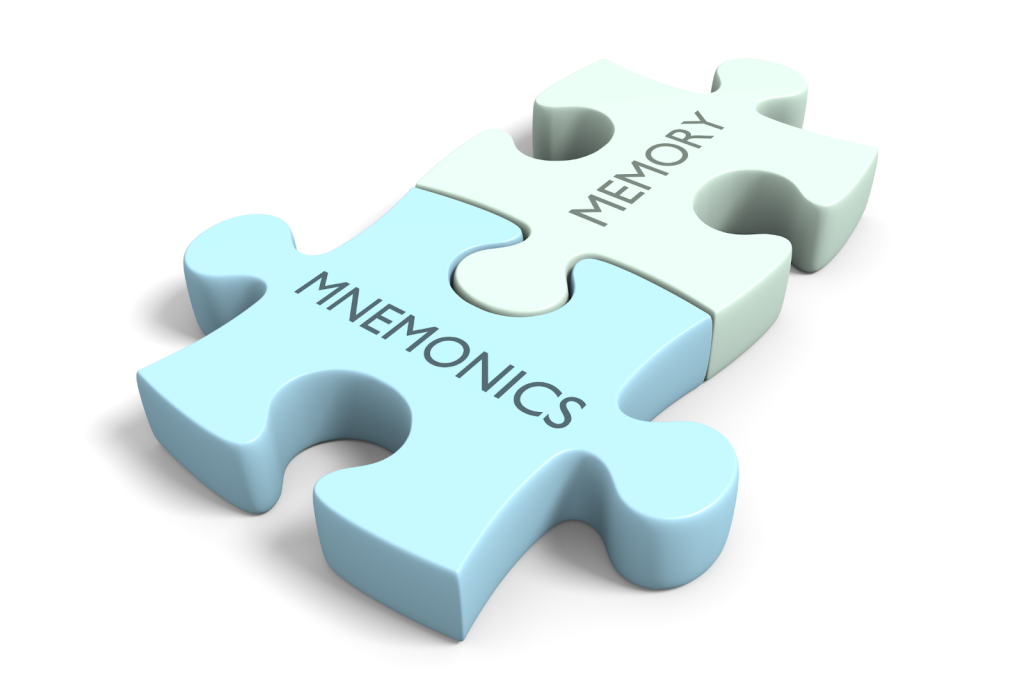
    "Visual metaphor of two puzzle pieces discussing mnemonics and memory, symbolizing the interconnected relationship between mnemonic techniques and memory enhancement."

    How is the method of Loci useful for learning?

    The Method of Loci is used for memory enhancement; hence you can remember things by using it and also enhance your power of memorization. It is not specific to any age bar, be it an adult or a child anyone can use it. Plus, it is fun and creative and it’s unlikely you will get bored using it.

    For this method, a real location is not necessary. In the video game era, memory palaces can be constructed using game maps. These offer a creative and accessible approach to enhancing memory skills. Not only locations or maps but any other images can also be used in this method. You just have to remember this – you need to match permanent or familiar items with the temporary information you want to remember.

    This method is very useful for students. Students, burdened with memorization, find ease and reduce stress by employing effective learning techniques for enhanced recall. Along with memorization, it also helps us to comprehend things properly. For example, if a school student is unable to understand a particular text from their book, he can use this method. It will help him comprehend as well as memorize the important things they need from the text.

    Conclusion

    While it may seem like an extraordinary feat to create a functional mind palace, it is quite achievable with a bit of practice. The next time you have a lot to memorize, try the Method of Loci. If you struggle to recall names or find yourself forgetting tasks, it’s a valuable technique. Who knows, you might become the next real-life Sherlock Holmes.

    IB Media Analysis Essay – now this section of the IB English paper is a challenge for many students because of its nature. It’s an unseen text with no hint beforehand. The only way to ace this paper is lots of practice, getting your basics right and maybe some magic dust!

    Easy? Then skip the article and score away! No? Read ahead then.

    IB LangLit Paper 1 at a glance

    As if choosing between IB LangLit and IB Literature wasn’t a conundrum on its own, it is essential especially for someone new to the IB DP to understand the paper pattern for IB LangLit.

    The IB LangLit component consists of 2 papers. Bear in mind that there’s an SL (Standard Level) and an HL (Higher Level) in these papers; and there is a choice between these levels in all 6 subjects of the IB DP. IB LangLit Paper 1 SL is a paper of Media Analysis, aka the subject of our blogpost today. This analysis is delivered in an essay format, and the structure of your essay will also play a key role in scoring well.

    What’s the difference between SL and HL?

    The only difference between SL and HL for particular components (post 2021) is that the former has one question on the media analysis of a non-literary text whereas the latter has 2 questions on 2 different texts. 

    Types of texts involved in IB LangLit Paper 1

    So what type of texts are we talking about? The term ‘Media Analysis’ is a lucrative and frankly generic term which refers to many text types spanned across multiple modes of media. It could be a magazine article on real paper, or a tabloid piece on the web. Apart from these, there are advertisements, posters, comic strips, newspaper articles, infographics, interviews, travel stories, service/product reviews, opinion pieces, blog posts and even journal entries – you name it. Seems like a lot, but trust us, you just need to get your basics right and you can analyze any type of text or media. 

    For that, let’s move on towards our Young Scholarz (YS) Approach to IB Media Analysis.

    The YS Way of Analyzing text

    Here are a few ways to approach and build your skills for IB Media Analysis:

    1. Identify the text and its purpose

    We’ve given you the ammunition – the entire list of possible text types. Once you’ve successfully identified the type of the text, you can approach it with full gusto and many ideas also come into being. For example, let’s take a look at this interview with Minoli Salgado. Spend some time studying the text at a glance.

    A few questions to ask yourself:

    • What is the mode of this text? 
    • Has it been published online, or does the layout look like that of a newspaper/magazine? 
    • Who is the author of the text, what is the purpose of this text? 
    • What type of content do you see? 
    • What’s the tone and mood of this text?

    2. Identify the themes, global issues, and its brief overview

    These are key to your analysis – structure your essay on the basis of its themes. Let’s look at the interview mentioned above – some questions to ponder on: 

    • What themes could you come up with? 
    • What would the overview or main idea of this advert be? 
    • When we look at it, we see a range of themes – race/ethnicity, feeling of belonging, women empowerment, voice of the oppressed, bias against diasporic writers. 

    Based on these, you need to build up on your ideas. Try to come up with the main idea for this text and many supporting ideas can come to light.

    3. Apply ‘The Big 5’

    The essence has been conveyed above, but narrowing it down to these 5 aspects will help you structure a much better, well-organised answer. Famously called The Big Five, or the acronym ACTSS.

    1. Audience and Purpose 
    2. Content and Theme
    3. Tone and Mood
    4. Stylistic Devices
    5. Structure

    Keep these 5 things in mind while analyzing the text and you’re sure to achieve a win.

    Do you find this cryptic and difficult to follow? Reach out to our experts for an in-depth understanding of this section with individual, one-on-one focus.

    4. Plan, plan, plan

    We’ve said it before, and we’ll say it again, but you HAVE TO plan your essay before beginning your answer. There’s no way out of this. Believe us when we say that we’ve seen a huge difference between student answers where they have blindly dealt with their essay and those where they have planned and organised their ideas before they begin. Divide your essay into subtopics, and include relevant examples, literary devices and stylistic features for each of your ideas.

    This works for just about any literary answer and makes a TON of difference to the quality of your answer.

    5. Annotate as you read

    How do you extract important points from the text? Use a pencil and underline those words, images; put those grey cells to use as soon as you’ve begun on the title of the text. Circle, doodle around, but make sure to highlight any bits of information that add value to your ideas. This could be words, images, colour schemes, font size and style – these are crucial to your answer.

    Annotating the text is a great way of ensuring that you’ve picked up information without reading the text a second time, saving extra time to focus on your essay.

    6. Study the stylistic features

    As we’ve mentioned before, the essay is broken down into different aspects that you need to identify. You need to study what stylistic features and literary devices are beforehand, and this is key to analyzing any text type. The ability to identify the role that images, colours, font-sizes and layouts play in achieving meaning and effect upon the reader is all that the question is about.  You’ve got your main idea, themes, and examples from the text. All you need to do now is practice.

    7. Practice, practice, practice

    We’re confident that this blogpost has laid out key pointers for you to attempt the LangLit Paper 1, but you know it’s not that easy!. We have students coming in every day but yet, we don’t give them a grade 7 after their very first practice assignment. Why? Because practice and ONLY practice will help you out with scoring well. Along with that, you also need to know your errors and work on them. 

    At Young Scholarz, we can help you do just that. With detailed and personal feedback, we have seen students go from a 4 to 7 in just a few months’ time, depending on the student’s inputs too of course.

    Now that we’ve brushed up on tips, would you be able to analyze this text/ blog post you’ve just read? Leave comments below – we’d love to hear from you. 

    Do you want to study in a more organised way or are you tired of the traditional note-taking method? Do you want to organise your thoughts and ideas in a more structured way? Well, in that case, read on to see how Mind Maps help you study better! 

    What are Mind Maps?

    Mind Maps are visual thinking tools that help us utilise our cognitive abilities to the maximum. We use these as a study aid to clarify our thoughts, structure information, simplify complex ideas, memorize information, and take notes efficiently. Individuals have used visual diagrams, including branching and radial maps, to map information for centuries. The term ‘mind map’ gained popularity through Tony Buzan, a renowned British psychology author and television personality. 

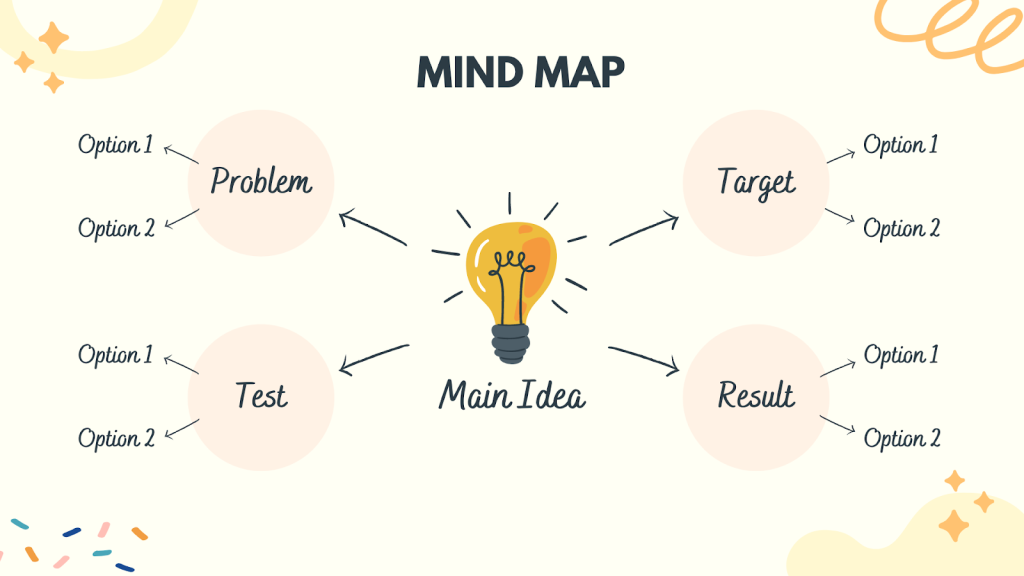
    A colorful mind map chart featuring interconnected branches, nodes, and keywords, visually representing organized and structured information.

    Why use Mind Maps to study?

    You might be wondering why we need mind maps when the traditional note-taking method already exists. Well, mind maps or mind mapping can do just more than note-taking! Let’s see how useful mind maps are and how they can help you study better.

    1.  Mind maps help you to learn and analyse new concepts, comprehend and generate new ideas in a better way. 
    2. Students can benefit greatly from using Mind Maps for studying, as the format enhances information recording and creative problem-solving abilities, ultimately aiding better memorization.
    3. Mind maps are versatile tools, aiding in note-taking, planning, organizing information, creative thinking, studying, and more. They efficiently break down large topics, presenting a visual and manageable overview. This way, you can plan effectively without getting overwhelmed or forgetting something important.
    4.  Mind Maps are not lengthy like conventional notes and often take up just one side of the paper. 
    5. Unlike conventional or linear notes, mind maps are visually more attractive, enabling you to see the better-connected relationships between different ideas or concepts.

    How to create a mind map?

    To create a mind map, you need to start with a specific topic or central idea and then follow these steps –

    1. You need to place the central theme or main idea in the centre of the page. Placing the page in landscape orientation might be helpful for drawing purposes.
    2. You need to draw lines/ arrows/ speech bubbles/ branches as ways of showing the connection between the central theme/main idea and the other ideas that stem out from that central idea. These branches are very important.
    3. As you go on brainstorming, you can go on adding more branches from the existing branches adding more information to the primary idea till the point of completion.
    4.  The sub-branches will contain more detailed pointers or branches for overall understanding which will help you develop and elaborate on the overall theme of the mind map.
    5. Including images and sketches can make your mind map visually attractive.
    A thoughtful girl contemplating the creation of a mind map as a study aid, with a pen in hand and surrounded by study materials.

    A Mind Map pro tip –

    You can create mind maps either on paper or on a computer using mind mapping software such as Bubbl.us and MindMeister, enabling us to edit as we create. Check out another mind map article here for more tips!

    Conclusion

    Now that you know how using mind maps for studying can be effective, we hope you’ll try them out! If you’d like to see how mind maps can be used in a subject/ topic, book a 1:1 session with us! Our teachers at Young Scholarz can help guide students towards grasping concepts better through mind maps. 

    The ToK, or Theory of Knowledge, is a mandatory component of the IB DP Core. The ToK essay is a 1600-word essay that students prepare in their own time, before the set deadline. This tends to easily be one of the most dreaded topics for an IBDP student, we know. Especially when the deadline is nearing, the pressure to score well is ever on the rise. But, once you’ve understood the basic concepts and how to approach the topic, the IB ToK Essay is not as difficult as you perceive it to be. In this blog post, we’ll talk about some key tips for the IB DP ToK Essay.

    How important is the ToK?

    The IB Core Component consists of ToK, EE (Extended Essay), and CAS (Creativity, Activity and Service). Failing either one of these fails you in your Diploma Programme even if you’ve earned the rest of the 42 credits in total, so one cannot take it lightly at all. Not only are these components crucial to your score but also add immense value to your college application, if you score a 3 in total (ToK + EE) you’ve earned yourself 45 credits and that plays a vital role during university admission.

    What is the Theory of Knowledge?

    Scientifically known as ‘epistemology’, ToK (and not TikTok) is the answer to how we know what we know. Epistemology by definition is “the theory of knowledge, especially about its methods, validity, and scope, and the distinction between justified belief and opinion”. It explores the main question of ToK – ‘How do we know what we know?’, ‘How do we discover what we know?’ and any other theories or questions about knowledge.

    Now, without further ado, let’s jump onto the tips and tricks of scoring better in an IB ToK Essay:

    Plan, Plan, Plan.

    We said it 3 times because it’s THAT important. Like any other answer method that we teach at Young Scholarz, you need to plan your ToK essay. Read the title carefully, annotate the keywords, think of 2 real-life examples, and then plan.

    If you have signed up at Young Scholarz for solo sessions with the best teacher onboard, you’ll know how to carefully plan out a ToK essay, making it a tad bit easier to fill in the information and structure your response more neatly. You can also refer to this website to help outline your essay. (But our recommendation would be to consult an expert who can tailor your ToK.)

    Understand the AoKs and WoKs of the essay

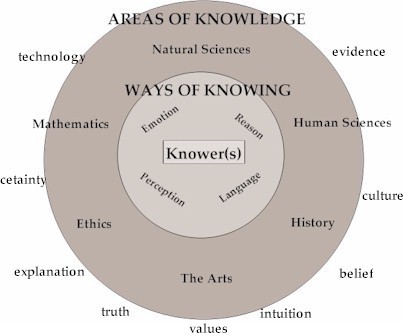
    Image: shows a way of thinking about the IB DP ToK essay. It shows the areas of knowledge and the ways of knowing.

    We say keep them enemies closer than your friends. Tricky as they may sound, the Areas of Knowledge (AoK) and Ways of Knowledge (WoK) are integral to building a logical and well-defined essay. Understanding them well helps you pinpoint the knowledge claim in your chosen question. You should have at least 2 to 3 WoKs and AoKs* in your essay, making sure to draw up relevant connections and appropriate claims and counter-claims.

    Display your knowledge on the topic

    Come up with a few interesting and unique things to write about your ToK title to show that you know the title well. Read up well on the ToK concepts and include them in your essay. Begin your essay with these ideas to hold the examiner’s attention and form an impression in the beginning. Enhancing your vocabulary and incorporating ToK-specific jargon can also help you score higher levels.

    Challenge your own opinion

    Image: a mirror image punching the actual person to show that we need to challenge our own opinions. This is a tip for students studying the IB DP ToK essay.

    You heard it right. Although in real-life situations a conflict in your mind is often discouraged as you come off as indecisive, for ToK that’s exactly what we need. Challenging your initial opinions and thesis will help you come up with the right claims and counter-claims for a well-researched IB ToK Presentation.

    Expanding your research base

    ToK being a vast and vague topic, there’s no beginning nor end to acquiring knowledge in this field. To make every word of yours count, it’s essential to read up on different topics, collect material from different resources, and understand a range of perspectives by involving others in your essay – talking to classmates, teachers, friends, and family, and using various other sources can help you construct arguments effectively on both sides of your thesis, also providing examples to support your claims and counterclaims.

    Study exemplar ToK essays

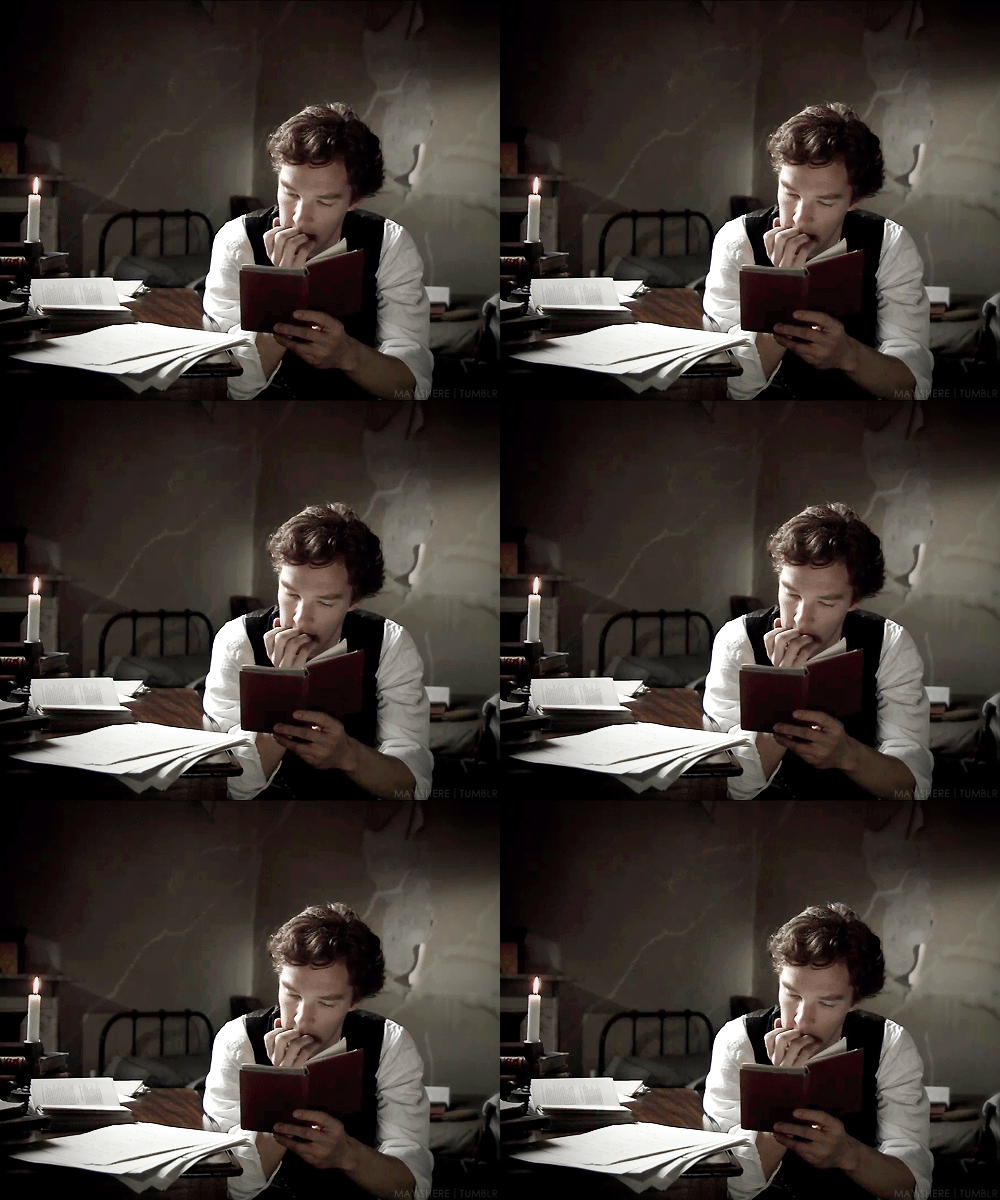
    Image: Sherlock Holmes diligently reading and studying notes. This is a tip for the IB ToK. One should study examplar ToK essays.

    How do you find your voice when your knowledge is dependent on external resources? Read past ToK essays with great scores written by previous students. This provides a platform for a multitude of ideas, displaying different ways of thinking and unique ways of approaching a topic. Reading past essays will also help you overcome any challenges that you’ve faced while writing, at the same time providing opportunities for you to choose which approach works best for you.

    Deconstruct past ToK essays for an outline

    You’ve got all the material in front of you. It’s a lot of information to take in. How do you incorporate these to form your original piece of work? After reading past ToK essays, you need to deconstruct them and form an outline of their essay. This will help you study how the others have structured their answers, and also give you an idea of how you can incorporate examples, evidence, and supporting ideas to explore and develop your claims and counterclaims.

    Conclusion

    And there you have it: 7 effective tips in scoring for your ToK Essay. Planning, researching, and organizing are crucial for any essay, but you should know where and how to build an effective one. You don’t? There’s no need to worry. You can sign up here, or browse our course page if you want personal guidance and feedback for your ToK Essay!

    Notes:

    1.  *Ways of Knowing are what they suggest – the tools or methods of gaining knowledge. These include language, emotion, perception, reason, imagination, etc.
    2. The Areas of Knowledge are the IB ToK Topics that help you focus on a particular ToK title: ethics, history, natural sciences, mathematics, language, religion…the list is long.

    Main idea. Check. Intro. Check. Purpose of Essay. Check. Effective Conclusion. Umm…

    Now let’s imagine this. You just had the best meal of your life. Scrumptious, juicy, and flavourful. And then came the dessert – a mousse that was chalky and grainy in texture. That perfect meal isn’t so perfect anymore.

    This is similar to a perfectly ruined essay. From our years of teaching experience, we have found that students lose important marks because they don’t end their answers well. Be it an IGCSE exam, an IB exam, or a University Essay, every component of your essay needs to be done properly. Some students begin very well, but then lose their flow in the middle, or even towards the end. By the time they’ve reached their conclusion, they’re in the middle of an ocean with no shore to swim to.

    "SpongeBob diligently crafting an effective conclusion - a humorous depiction of focused writing and thoughtful conclusion-building."

    This blog post should help give some insight into writing an effective conclusion that also functions as an appropriate ending or a close.

    But first, why is the conclusion so important?

    It is an appropriate close to a thesis statement or an argument. Where the thesis answers the ‘what’ or ‘why’, the conclusion answers the ‘so what now’. It leaves a lasting effect on the reader with a thought process to carry forward.

    Writing An Effective Conclusion for your essay

    1. PLAN
    "Image emphasizing the importance of organization and planning for crafting an effective essay conclusion. A visual representation of strategic thinking and thoughtful writing process."

    Our students know this. We teach them from the very beginning to plan their answers before they begin. This not only organizes your ideas in a logical sequence but you’re also equipped with points to include in your conclusion.

    A good body structure is the basis for a good conclusion.

    1. BE CONSISTENT
    "Visual representation highlighting the importance of consistency in crafting an essay conclusion. Consistent writing style and coherence contribute to a polished and impactful conclusion."

    While writing your conclusion, make sure that your tone and style are consistent with the rest of your thesis argument. A contradictory tone will confuse the endpoint and hamper your main ideas explained throughout.

    Your conclusion must reinstate the same points that you’ve touched upon, but try not to use them verbatim, and summarise your points in a brief manner.

    1. AVOID NEW SENTENCES OR IDEAS
    "Image advising against introducing new sentences or ideas in an essay conclusion. Emphasizing the importance of maintaining focus and summarizing existing content for a cohesive conclusion."

    Avoid bringing in new ideas in your conclusion. This is another thing that we notice in students’ answers. Bringing in new ideas does not do justice to them, and they also have no scope for exploration, nor do they add value as they’re left incomplete. Instead, shift these new points from your conclusion to your body paragraphs, giving them more scope for exploration.

    1. FORM A CONNECTION
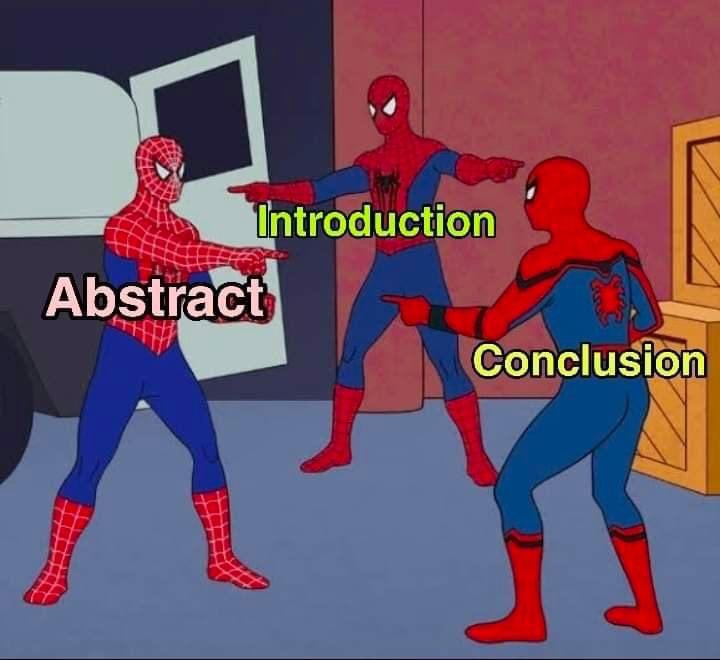
    "Image underscoring the significance of a seamless connection between introduction, abstract, and conclusion in an essay. Demonstrating the coherence that ties the entire piece together for a comprehensive and unified reading experience."

    The point of your conclusion is to bring an appropriate end to your answer or essay. And, that means that you need to connect your closing statement with your opening statement. That makes the end of your answer look more structured, systematic, and cohesive.

    This displays your focus on organizing your ideas and sets a neat impression on the examiner or the admissions officer.

    Apart from these, here are other pointers to help you write a strong conclusion for your next writing project:

    1. Plan your conclusion just like you’d plan the rest of your essay to ensure a great flow of ideas.
    2. Maintain a consistent tone throughout your conclusion.
    3. End on a positive note.
    4. Rephrase and summarize your main points.
    5. Communicate the importance of your argument.
    6. Write with the intention of providing closure to the reader.
    7. Avoid beginning your conclusion with the words ‘in conclusion, to conclude, in summary, to recap’, etc.

    Here’s a brief outline to help you plan your conclusion paragraph:

    1. Topic sentence – This would be a repetition of your thesis statement or overarching idea. You must make sure not to repeat the exact words and yet retain the essence of the thesis.
    2. Supporting sentences – These should include all your important points that support your thesis statement, and express the importance of your ideas as well.
    3. Concluding sentence – Being the final word on the subject, the closing statement should connect back to an image or an anecdote that was initiated in the introductory paragraph.

    Remember, if you’re an IB or IGCSE student needing help with your essays, our experienced, dedicated teachers are there to guide you. Contact us!

    The most necessary task to do for an increase in productivity during exams is to revise the topics learned so far. The key is to not forget what you have learned and retain it for a long time. Memory is formed by revision that depends on consistency, frequency, and regularity. However, if it’s not planned properly, the process can become tedious. The IB Chinese with the course code CHIN 1002, is rather an easy-to-score paper if planned and revised properly. Here are a few tips which could be used to make revising less daunting. 

    Read and Highlight 

    Image depicting the effectiveness of reading and highlighting for IB Chinese revision. A study strategy that enhances comprehension and aids in focused review for exam preparation.

    Reading is a skill that can be nurtured and developed. Consistent reading practice will make you better at it day by day. While reading through a new text, it is also important to highlight the words that are unfamiliar to you. This will help improve your vocabulary and will also enable you to understand the text better.

    Since you are learning a new language, content mastery is also important.

    Write

    "Image illustrating the benefits of writing for IB Chinese revision. A study technique that reinforces memory, enhances language skills, and aids in thorough exam preparation."

    Documenting all the new words learned might help you navigate through the syllabus better. It can be beneficial if you are able to consolidate all the content you have been exposed to, into one place. Try to add at least 20 words every day to the list. This will broaden your vocabulary so that you are able to articulate concepts accurately and more effectively to others.

    Thus apart from learning your subject material, this will also increase your ability to communicate. Writing also helps in improving your spelling.

    Practice

    "Image emphasizing the significance of practicing for IB Chinese revision. Reinforcing language skills through active practice for effective exam preparation."

    As the famous proverb goes, “Practice maketh a man perfect”, it is important to continuously practice especially while learning a new language. It is advisable to write down each of the new words three times along with the English words so that you can comprehend them in a better way.

    Practicing 10 -20 new words every day and repeating the process when you read through another new lesson will help you in the long run.

    Stick to a study plan

    Image highlighting the importance of a study plan for revising IB Chinese. A structured approach to preparation, ensuring comprehensive coverage and effective understanding for exam success.

    With multiple distractions coupled with the intense rigor of the IB syllabus, students might find it hard to focus on studying, especially for their SL subjects such as IB Chinese. Hence, it is necessary for students to craft a study plan and stick to it. It is important to create a study plan that is feasible and realistic. Taking breaks in between your study hours is advisable.

    Every day, take 15-20 minutes to read a book that is not a part of your IB Chinese syllabus. When you learn any new words and phrases, find some friends speaking the language and practice what you have learned with them. 

    Learn with a Chinese Expert

    "Image promoting the benefits of improving IB Chinese through expert tutoring. Personalized guidance to enhance language proficiency and excel in IB Chinese studies."

    For those who come from non-Chinese speaking backgrounds and are not exposed to Chinese on a regular basis, the language will be challenging. They may need to spend extra time and effort learning the language and find themselves discouraged easily whenever they do not see large improvements. For this reason, it is beneficial to get extra help. 

    At Young Scholarz, students will have an allocated amount of time every week for targeted, personalized help in Chinese. You can register for 1:1 or group classes with us and learn from our expert Chinese teacher. Check out our IB Mandarin ab initio and IB Mandarin Language B at both SL and HL.

    “Mrs Sunita, I have 93% A* in English First Language”

    “Dear Sunita, thank you for your patience and guidance for the past two years. My son  scored A* for both English Language and English Literature.”

    (more…)

    “Thank you so so much for all your help, advice, love, and support all these years. You genuinely helped me build my confidence in English and I loved learning from you.”

    (more…)

    Reading has multiple benefits! To name a few it can help boost your mental health, it’s the ultimate relaxation, helps you understand history, develops your imagination and creativity, and opens up new avenues of learning. The benefits of reading help you give direction and help you become successful in life. And the best part? You get all these benefits while enjoying it! We know it can be daunting to decide what to read. We’re happy to help! We have made a list of the top 10 Summer 2024 reads suitable for grade 12 students who are ready to jump into intensive reading. 

    Download the checklist at the end to track your reading list. 

    Once you’ve finished our top picks? Fret not! We have an extensive list of books at the bottom for you bibliophiles. 

    Your Top 10 must-reads for grade 12

    1. Frankenstein by Mary Shelley

    “Every book that has been written about artificial intelligence since Frankenstein owes something to Mary Shelley. I found the relationship between monster and creator compelling and fascinating”

    • The Guardian, dated August 6, 2014
    2. The Adventures of Huckleberry Finn by Mark Twain

    “Someone who likes suspense and adventure books would enjoy this. It also helps to have a good sense of humor.”

    • The Guardian, dated March 4, 2012
    3. Petals of Blood by Ngũgĩ wa Thiong’o

    “A compelling novel about the tragedy of corrupting power, set in post-independence Kenya…Ngugi writes with passion about every form, shape, and color which power can take.” 

    • ​Sunday Times
    4. Cat on a Hot Tin Roof by Tennessee Williams 

    “Tennessee Williams’s 1955 masterpiece shows you a Mississippi world awash with whisky and lies. Brick – former college football star and impotent husband of Maggie the Cat – would rather numb himself to oblivion with booze than own up to the real nature of his relationship with his dead friend Skipper.”

    •  Review on independent.co
    5. The Trials of Brother Jero and Jero’s Metamorphosis by Wole Soyinka

    “(The play is) a broad spoof of a religious humbug, a con man of prophecy who lives by mulcting his worshipers, or ‘customers,’ as he calls them in moments of absent-minded lucidity.”

    • Review in Time magazine
    6. The Changeling by Thomas Middleton and William Rowley 

    “This punchy cocktail of modern parenting and ancient magic taps into contemporary unease and age-old fears. It follows Apollo Kagwa and Emma Valentine, who fall in love in a New York library and have a child. Parenthood’s feverish early days end in an act of brutal violence, and suddenly the anxieties of fatherhood, race, and money are dwarfed by otherworldly peril.”

    • The Guardian, dated September 1, 2018
    7. Crime and Punishment by Fyodor Dostoevsky

    “Crime and Punishment” is about many things—the psychology of crime, the destiny of families, the vanity and anguish of single men adrift. But, midway through the book, Dostoyevsky’s writerly exuberance allayed my worries. He’s an inspired entertainer, with his hectic style of comedy. His characters show up reciting their troubles and lineages, their lives “hanging out on their tongues,” as the critic V. S. Pritchett put it.”

    • Review in The New Yorker
    8. Beloved by Toni Morrison

    “Beloved” is one of the few American novels that take every natural element of the novel form and exploit it thoroughly, but in balance with all the other elements. The result is that it is dense but not long, dramatic but not melodramatic, particular and universal, shocking but reassuring, new but at the same time closely connected to the tradition of the novel, and likely to mould or change a reader’s sense of the world.”

    • The Guardian, dated July 8, 2006
    9. Midnight’s Children by Salman Rushdie

    “What makes Midnight’s Children so extraordinar­ily important, and (for literary importance isn’t always matched by a fetching readability), what makes it so vertiginously excit­ing a reading experience, is the way it takes in not just the whole apple cart of India and the problem of being a novel about India but also, and this with the unflagging zest of a Tristram Shandy, the business of being a novel at all.”

    • Review published in TLT on 8 March 1981 after book’s release
    10. Things Fall Apart by Chinua Achebe

    “If you don’t like someone’s story,” Chinua Achebe told The Paris Review in 1994, “write your own.”

    In his first novel and masterpiece, “Things Fall Apart” (1958), Mr. Achebe…did exactly that. In calm and exacting prose, he examined a tribal society fracturing under the abuses of colonialism…In many respects “Things Fall Apart” is the “To Kill A Mockingbird” of African literature: accessible but stinging, its layers peeling throughout multiple readings. “

    • From the New York Times

    We’ve also designed a printable version of our Top 10 reading list to help you track your progress and reflect on the book(s) as you read. 

    You can download it using the button below. Feel free to print and share with your friends too.

    Happy Reading!

    << Download the printable version of our reading list >>

    << Download the complete IB Reading List here >>

    Ready to start your lifelong journey with us?

    We guarantee an improvement in grades, with most students improving by an average of 2 bands.

    Sign Up Here

    Get in touch

    Expert Tuition for Academic & Career Success

    The Waterside
    Tanjong Rhu Road
    Singapore 436896

    +65 97829419


    Popular Searches

    • IB Courses
    • IGCSE Courses
    • SAT/ACT/GRE/GMAT Courses
    • University Admissions
    • Free IGCSE English Assessment
    • Free IB English Assessment
    • User Sitemap

    Featured In


    Copyright © 2026 Young Scholarz

    Privacy Policy | Terms & Conditions
    PHP Code Snippets Powered By : XYZScripts.com