Time management is like that one friend in your group who’s quiet as a mouse but their presence is only felt when they’re not around. It’s a skill that everybody strives to achieve but very few hone and accomplish. Procrastination, being one of the biggest enemies of time management, takes over like a plague for most of us. When it does, we’re usually left with self-disappointment and a void in the end.
But with some pre-planning and mindfulness, we can effectively combat this and emerge victorious – not in the eyes of others but for ourselves. To help you regulate your time and work more effectively, we have introduced an amazing tool in this blog post. This is a commonly known work management tool that has been in the rounds for more than half a century!
That’s right – the Eisenhower Matrix was introduced in the 1950s and continues to be employed, referred to, and thanked for in the present day.
The Eisenhower Matrix
Also known as the Eisenhower Box, the Urgent-Important Matrix, or the Time Management Matrix. It is named after President Dwight Eisenhower, the 34th President of the United States. This tool was not just created by him but also manifested itself in his professional career. Before he became president, he was a 5-star general in the US Army during the Second World War. Throughout his professional life, he brought about many changes that were helpful to the nation.
During his presidency of two terms, the Interstate Highway System was brought into play. NASA was created, and the first-ever civil rights legislation was signed into law. In addition, Alaska and Hawaii were brought into the union, and the Cold War with Russia was, well, maintained as cold. All of this was done with an efficient and calm hand – a solid example of prioritizing tasks. All in all, Eisenhower was a pretty productive guy. That’s a swell reason for having him get the ‘most admired man of the year’ title 12 times by Gallups.
This matrix was made even more popular a few decades later by the self-help genre author Stephen Covey. In his book, “7 Habits of Highly Effective People“, he refers to this matrix as a powerful tool to prioritize tasks and manage time well.
What the Matrix does
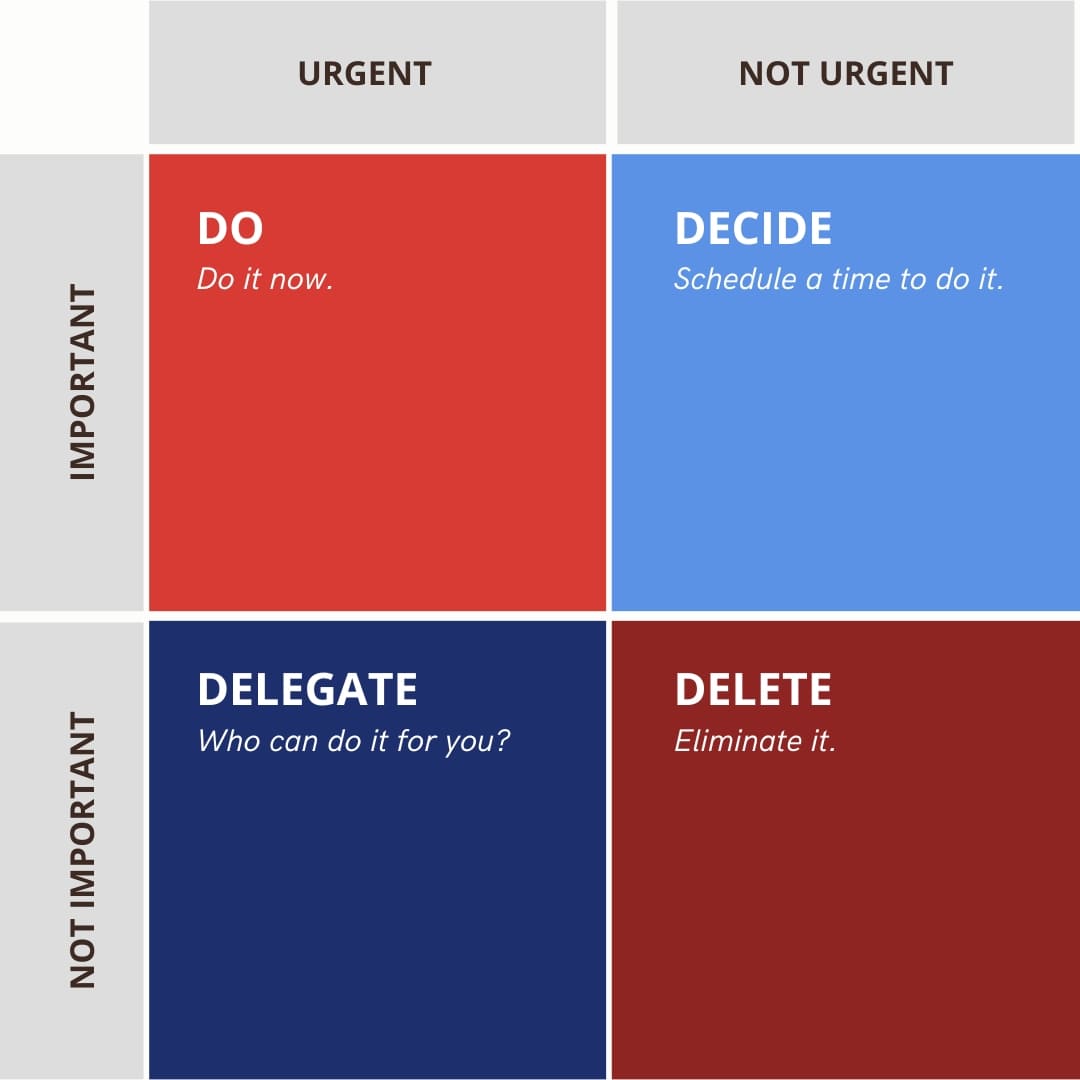
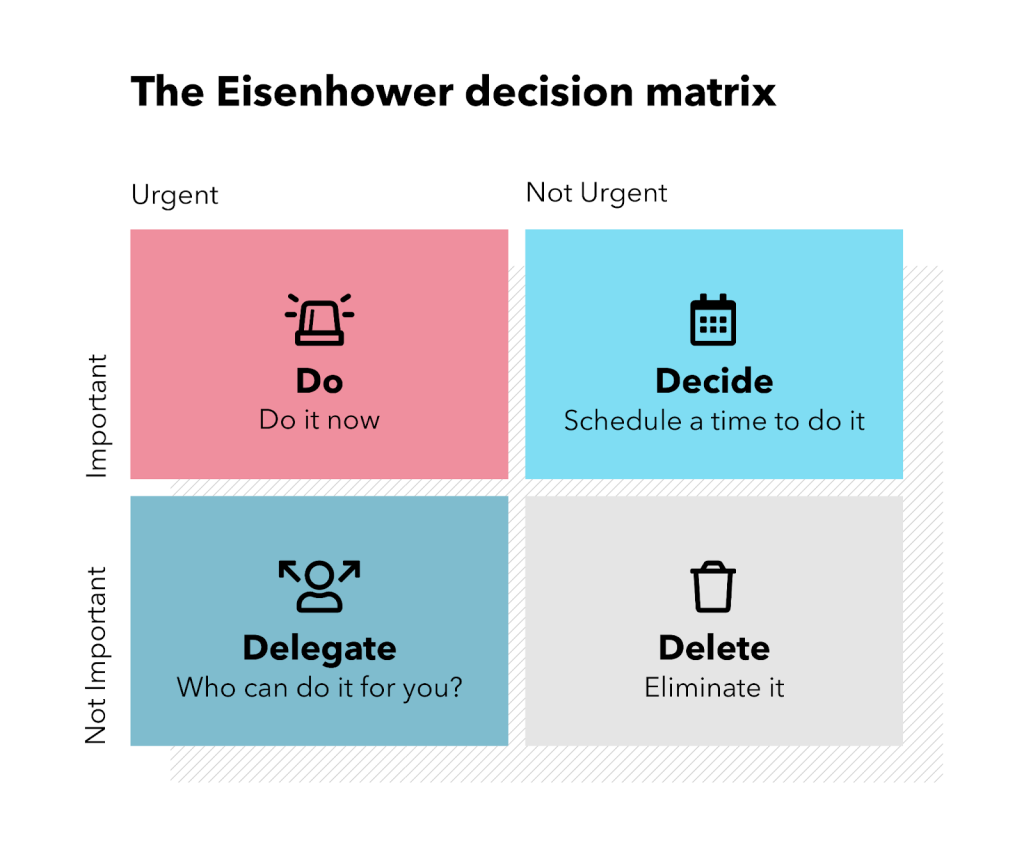
Cutting back to the matrix, it is a large square divided into 4 smaller squares. These quadrants are your workboxes, where you divide and segregate tasks in a manner of urgency and importance. Penned down by the president of Northwestern University, Dr. J. Roscoe Miller, Eisenhower quoted in a speech,
“I have two kinds of problems: the urgent and the important.The urgent are not important, and the important are never urgent.”
Against the popular misconception, urgent and important do not mean the same, nor can they be used interchangeably. The urgent tasks are those that need to be done right away, or else they’d have significant consequences for your long-term goals. On the other hand, some important tasks are not urgent but they should be done to achieve your long-term goals. To understand this better, we will break it down into quadrants as seen in the image below:
Understanding the Eisenhower Matrix
Quadrant 1
As the first quadrant mentions, this box would contain all those tasks that you need to DO right away. Filling out a university admission form or signing up for school drama may have tight deadlines. On a personal level, responding to a fire caused during unsupervised cooking demands immediate attention.
At work, it’s crucial to time yourself with urgent tasks. Spending too much time on them can leave little room for other quadrants, resulting in a messy situation.
With the exams coming up, we’re sure you have a lot of tasks to fill into the first quadrant! But, if you schedule them beforehand, you can avoid getting into a last-minute panic mode that would eventually burn you out. So choose wisely!
Quadrant 2
The second quadrant, also known as the SCHEDULE box, holds tasks that are important but not urgent. For instance, exercise is crucial for health, but not doing it in the next hour won’t turn you into a lazy blob instantly. Well, if you never do it then you might just.
Another example is prepping for your upcoming mock exams – extremely important for next week but so is the urgent assignment that you have to submit in your private tuition class today. You get the drill, don’t you?
Scheduling tasks for the day, week, or month helps prioritize and manage them in advance. This prevents last-minute shifts to the first quadrant.
Quadrant 3
The DELEGATE box, or Quadrant 3, is the section where you add tasks that are urgent but not important. They are not necessary to be done by you, and may not adhere to your skill set. For those delegating tasks, assign them to someone else to ensure timely completion. Examples include having a teacher review assignment feedback or having a sibling walk the dog. If your mother needs urgent help in the kitchen while you’re studying, direct a sibling to assist, and don’t hesitate to ask for help when needed.
Quadrant 4
This box is neither urgent nor important – hence the apt name given to it is DELETE. This is the procrastination inducer, a major distraction, the purple little devil ruining your planned day. Mindlessly scrolling through TikTok at dawn, ending with your mother screaming from downstairs – you know what we’re talking about.
These would also include binge-watching shows on Netflix or Rakuten Viki or being glued to your gaming consoles for hours on end. Although a short break is essential and rewarding for your long-term goals, this is a tricky and sticky trap that you need to control. A break that lasts very long would end up hampering the rest of the quadrants and giving you unnecessary panic and anxiety to complete your tasks in time.
You might think it’s easier said than done, hence we have listed down a few pointers to help you make use of this powerful tool to its best.
Effectively Applying the Eisenhower Matrix to Everyday Life
Code your tasks with some color or numbering
Make use of colors to separate the boxes and reduce the time given to the matrix itself. For example, quadrant 1 can be green, quadrant 2 yellow, quadrant 3 blue, and quadrant 4 red. Some might find it easier to swap the first quadrant with the color red, as red signifies danger and urgency.
Once you’ve got the hang of the colors, you begin to associate tasks more effectively. You may not always have the means to sit and make boxes all the time, but you can always draw up a list and highlight the tasks according to the colors. Alternatively, you can use numbers. The numbers are synonymous with the quadrant numbers 1, 2, 3, and 4.
Take a look at the example below:
Limit your tasks
If you’ve got too many tasks to do, and if you fill one box with 10 + tasks, there’s a good chance you’re going to flip, plonk up on your bed, and end up doing nothing due to the overwhelmed. An easier solution is to limit the number and focus only on what you can do in the next 12 hours or so. Some work is better than none, hence you must always be realistic with your goals.
Separate the personal from professional
When you have a lot of tasks to do, mixing them all up could be catastrophic to you on a physical as well as mental level. There would be a few days when you’re overloaded with tasks in school as well as at home. Take, for example, a few guests coming over during the term end for a festival like Eid or Diwali to celebrate when you’ve got a main exam the very next day.
As we mentioned before, planning and prepping in advance reduces the workload, but separating your matrices into home chores and schoolwork can make a lot of difference.
Use the power of deduction
To reduce the number of tasks ending up on your to-do list, the first thing you do after making a list is strike off tasks that are unnecessary and insignificant. Why draw them up in the first place? That’s because they consciously help you eliminate actions that would hinder the rest of the tasks. For example, when you know you have to prepare a presentation after 2 days at work or at school, you might end up watching silly videos as a result of procrastination. If you cancel it in advance, you know what you’re not supposed to do.
We hope that this helps you plan and prepare your tasks more efficiently. We’re not saying that the Eisenhower Matrix is perfect, it has its flaws (for e.g. what if you’re an only child?). Whether you’re an adult who has just begun her new job or a grade 10 student who wants to achieve an A grade in their IGCSEs, this matrix is suitable for all ages and we’re sure it would help you well.
Exams can be intimidating. Students often complain that they lose marks even after having put in a lot of effort and hard work. They find themselves not being able to complete the paper on time. Some didn’t know the pattern very well and wished they learned a proper strategy for the paper. A tried and proven solution to practice well is a mock exam. Mock exams are considered practice exams before you appear for the final one. These are very important for IGCSE and IBDP students who wish to improve their grades. In this blog, let us understand why and how these mock tests are useful.
1. Familiarises us with real exam conditions
Mock tests are like the actual exams that are purely based on the latest exam pattern and syllabus of the respective examinations. They are designed in a way that helps the students feel that they are sitting at an actual exam. If a student practices with ample mock tests, no question will be too daunting.
2. Boosts confidence
Mock tests help the students check their level of preparation. It helps them know if they are on the right track and check if they are lacking anything so that they can work on them. This boosts their self-confidence which helps them to be successful in their examinations. Plus, it also keeps exam fear away.
3. Helps to analyze our mistakes
Analyzing one’s performance in mock tests plays a very important role. After each test, students should spend time understanding and analyzing their performance. One must go through each section carefully to understand what and where they went wrong and what could have been done in a better way. In this way, they will not repeat the same mistakes in the actual exams which will help in upping their grades.
4. Helps develop the right strategy
Rather than just learning the concepts and formulae, preparing the right strategy helps the students crack and clear these tests, and also get good grades. As the students keep taking mock exams, they develop the right strategy through a proper analysis of their performance in each mock. They will not only understand the test pattern but also use the mastered strategies for tackling the actual test.
5. Helps with time management
It becomes very difficult for students to attempt all questions in the given time if they don’t take time management seriously. This is where the role of mock tests is crucial. As we know now, mock tests are like actual tests. So when students sit for any mock test, it not only helps in enhancing their performance but also tracks their speed which helps them know if they will be completing their actual exam on time.
6. Helps you practice and prepare
We all know the phrase “Practice makes a man perfect”, and mock tests help us with just that. The more mock tests we take, the more we get better at that particular subject. What happens is that with proper practice and conceptual understanding, we tend to solve the problems that we are facing during the mock tests, which in turn helps us avoid those problems in the actual exams.
To conclude, if a student is serious while sitting for the mock test, they will also perform well in the actual exams as it will help them learn from their mistakes. If any student is lagging, he/she should start the preparation by understanding the concepts and learning the basics. Then apply those concepts while they are appearing for mock tests. Surely enough, the student will start seeing positive changes in his/her grades. If you need help and guidance, we at Young Scholarz are here to help you with mock tests and so much more. You can opt for mock texts or book a class (group and solo sessions). Our detailed feedback system will make sure that you know where you err, and help you improve well before the exams.
We are bringing back the exam preparation classes for IGCSE and IB exams to all students to gear up for the May 2023 main exams. These sessions will provide you with much-required practice and guidance to succeed in your exams. The exam prep sessions are important to help you prepare and assess your performance in a controlled environment.
We begin with brushing up on all the subjects, ranging from IGCSE language to IB Literature, so if you haven’t signed up with us, this is your chance to get an in-depth understanding of the papers. These sessions will be conducted online as well as in-person, so if you’re far away you need not worry!
The exam practice sessions will be timed and in an exam-induced environment so you will get to review your performance beforehand and improve before your finals. All the papers done during the sessions will be thoroughly marked with detailed and personalized feedback from our expert teacher, Sunita Sharma. We will guide you through any difficulty you may face in timing, planning, or executing your paper to help you achieve your desired result.
We have limited sessions and slots available starting the 14th of Jan and running through May 2023 to help our students prepare and get an edge. Check out the links below to view our schedule!
“I wanted to say a big thank you for all the time and hard work that you put in during the course of our sessions. They were life-saving lessons for me during IB and had a big impact in achieving a level 7 for English and Physics!”
“I’ve scored a 7 and it would have been impossible to achieve it without your help. Your teachings will continue to inspire me further as well. Thank you so much, miss!
These are the responses that we strive to receive after the exams, and a reinforcement to put in the same hard work every year.
We’ve done it again, and together! Our IB students have scored excellently with 7s in their English papers, both HL as well as SL. This is a proud moment for the Young Scholarz team, led by Sunita Sharma. Her constant guidance, support, and detailed feedback have helped our students succeed in their exams, with confidence that they would take these learnings ahead in their academic lives.
Group classes as well as 1:1 solo sessions have borne their fruit. We support IB English programs including IB LangLit, IB Lit, IB IO, and ToK throughout the year. Other than English, we provide support for other subjects too. You may take a look at the Courses page as well as the Events page for a timely update on the upcoming workshops. You can also take a look at our Paper Marking section for information on getting detailed feedback and assessment on your assignments.
Join our weekly IB English classes to prepare for the mocks and the main IB exams happening in May 2023. Sign up for our classes for a smoother and enriching learning experience and score well in your exams!
Once again, kudos to all of the IB students who scored excellently, and congratulations!
Another year has gone by. Disappointment, regret, anger, love, peace, joy, contentment – here’s a range of emotions laid out for you that you’ve probably felt in the past year. Is there any single emotion that you can describe 2022 in? How would you put it? We’d use the word ‘blessed’. It’s been an incredible year at Young Scholarz with new team members, new teachers, new students, and new learning experiences. We were able to travel more, survived another year through the corona, and welcomed the new year with straight As and A*s from ecstatic students. This blog post today is about reflections and resolutions on the year before and a cheerful welcome to the new year.
Was 2022 a good or bad year?
365 days is a large number when it comes to remembering things. You may not remember what happened last week! But there are many important events, instances, and feelings that stick around simply because they made a difference in your life. Ask yourself if this year was good or bad. Let’s reflect on all the things that happened in the past year. You can journal them down as well. This really helps close chapters that were either written well or ended roughly, and we can start again on a clean slate for 2023.
These are some questions that could help you reflect on the past year:
Which moments seem special from the past year?
The best moments would still be at the top of your head, write them down, reminisce, and in retrospect think about what made them special.
Which moments were not so special in the past year?
Think about events that were not worth remembering, and brought in sad or negative emotions. Don’t just think about how you overcame that event/feeling. Also, think about how far you’ve come since that experience. This helps deal with any unearthed emotions so you can start anew.
What did you do right?
As humans, we’re born critics and tend to always pick out the flaws in ourselves. But we need to appreciate the little achievements and the goals that we’ve accomplished so far – they seem little but may impact us in ways bigger than we imagine. So, ask yourself what you’ve done right last year and how it makes you feel today.
What did you do wrong?
This could fairly be an easy question but the goal here is not to feel regret or self-deprecate yourself. Remember that you only learn when you make mistakes. So remember the things you’ve done wrong and what you did, or can still do, to make it right.
How do you feel you’ve grown up in the past year?
Are you the same person as in January 2022? Definitely a no; nobody is. But how have you changed? What changes do you notice about yourself? Would the “2022” version of you make this comment or have this opinion? A good change is a positive welcome and an achievement in itself. Pat yourself on the back for getting through the year, you deserve it!
Reflect on how you would have done certain things differently
Thinking about your past actions and experiences, you need to think about possible choices or decisions that you could have made – had you done so then the consequences would have been different. Consider them as alternate endings to your story. But don’t think about them with repentance, but take them as learning experiences for the future.
What are you thankful for?
This is something that we must always, always do. We must always feel grateful for the things that we have and yet strive for the things that we don’t. We often only look at the glass half empty and that’s where most of the problems begin. Gratitude is essential and so you must think about all those things that you are thankful for to have in your life.
What can you do to improve yourself?
Looking back at the errors you’ve made, the goals that you haven’t accomplished, a wrong decision, or even something as small as something you said or did that wasn’t right – how would you change yourself? How would you improve yourself so you don’t do it again? Think about it.
The importance of self-reflection
A new year is a great way to reflect on your past so you can work on your future. It’s like a term-end report or a year-end mark sheet that you receive after every exam. Just like you’d like to improve your grades, and we’d like to help you do so, you can also assess yourself and work on your errors to live a more fulfilling life.
But that does not mean that when you fail midway you give up and wait for the next year. The idea here is to motivate yourself every single day and not just when you’re given a reminder to kill it.
New Year resolutions and what you plan to achieve this year
There was a time when New Year’s resolutions were just a joke and a one-off event; that was before the pandemic hit the globe and had us stuck at home for a good few months at a stretch. It was exactly at that point that we had time to reflect on ourselves, and were given a chance to work on ourselves and make a few changes.
Since then, people have become more self-aware – some have gone the extra mile and accomplished insane goals like acquiring multiple degrees and starting successful businesses in their garages. Others may have achieved smaller goals like decluttering that attic which they wouldn’t have done in another decade due to lack of holidays and leaves.
Your goals don’t have to be physical, they can also be inner goals. Everybody makes goals to eat healthily and exercise regularly – but these are a given.
Instead, consider trying to be a better person, a kinder, hardworking, a more giving person – these are qualities that you can instill and accomplish as goals. These are all lifelong changes that you can begin with at any time, and not wait a whole year to be a better version of yourself.
We hope this piece has helped you and wish you a wonderful, joyous new year ahead!
Many students take IB Economics assuming that it’s an easy, scoring subject. Well, they’re wrong. If that’s you then you need to re-assess your subject choices. Although it may appear to be an easy A, it’s a tricky area and we’re here to help you with a few tips and tricks to help score a 7 in IB Economics.
Tip #1: Terminologies and Concepts
A good chunk of IB Economics consists of a plethora of terminologies that would make the subject sound like a foreign language to you. If it does, then you must learn it like one! You need to understand and learn to be able to define these terms. Your answer requires definitions and meanings of these terms. Pretend that your examiner does not know the meaning of these economic terms and explain them while maintaining the flow of your answer. This would give an impression that you know what you’re talking about and help get a good score on your paper.
Along with terms, also get the basics right. You cannot take a step further unless you’ve understood what you’re studying. Be it micro, macro, international or global economics, you need to learn and understand the basic concepts involved in the subject, and only then can you customize your answer based on the question.
Tip #2: Diagrams
Just learning and drawing diagrams perfect to the T is not sufficient to give you a high score, leave alone a 7. You need to study the diagrams in depth, what they mean, and the factors that would cause changes in a diagram, like in a graph. Along with that, you need to master drawing a diagram within a minute. It should not eat up much of your writing time, and you should be left with a sufficient amount of time to analyse and evaluate them in your answer.
Diagrams usually involve recollection and reflection, hence forming a significant part of Papers 1, 2, and even Paper 3. While creating a diagram, make sure the necessary conditions are met and the specific details are shown on them. Practice so much that you can draw a graph or a chart blindfolded. How would you achieve this? Read articles relevant to the subject, and draw a diagram that matches the description, meanwhile timing yourself to finish it in one minute.
This is an issue that we see many students dealing with, that being the management of time. If you use up the hour making diagrams and struggling with them, you’re left with less time to focus on the analysis bit of your answer. And if you don’t analyse well, what’s the point of your answer? One more thing to keep in mind is labelling the diagram clearly and accurately. Make sure they aren’t left hanging. What do we mean when we say that? Even if the diagrams are complete, perfect pieces of art, not having a supplementary explanation can sabotage the goal of your answer. It’s best to practice diagrams right after class, making sure you can draw them from memory, explain them and evaluate them on your own.
Tip #3: Structure
Every answer is an essay, akin to an English language one. Hence, naturally, an essay requires a suitable structure and format to follow. Having a strong foundation is crucial to all IB DP Economics essays, and that means planning out a clear structure for your answers in Papers 1, 2, and 3.
Here’s a skeletal structure for reference:
Definition – you must begin by defining your key terms relevant to that question. Make sure that you maintain a good flow while you do this.
Diagram – draw the diagram necessary for that answer.
Explanation and evaluation – after drawing the diagram you need to explain what it means and what your main idea behind the diagram is. For example, short run vs the long run, the effects on stakeholders, the advantages vs disadvantages of a market economy, etc.
Examples – next thing to do is provide relevant examples to enhance your essay.
Closing statement – this could also be called the conclusion and includes a summary of the important points that you’ve covered in your answer. Make sure to wrap things up efficiently and address the question accurately and sufficiently.
Tip #4: Analyze and Evaluate
Now that we’ve touched base with the first 2 components, the next step is coming up with strong evaluations. How does one do that? The best way forward is to read and watch the news. Interlink newer economic situations with the ones taught in class. Combine news sources like The Economist with more mainstream sources like CNN, establishing a connection, in any, to understand textbook material with real-world examples.
Don’t just do it while you’re nearing the exams; begin on day 1 itself, while you’re in class. This habit of daily implicit analysis will help you come up with some interesting evaluations during the exam. Your display of original evaluation and analysis would show the examiner that you’re a level 7 IB student, in turn increasing the chances of scoring a strong 7!
The analysis and evaluation part of your essay is interconnected with the examples that you give from newspapers. Make sure you have the correct examples ready at your disposal while you scrutinize and form evaluations related to the question.
Tip #5: Examples from Current Affairs
Apart from the correct analysis and evaluation of the questions in an IB Economics paper, it is equally important to have the correct examples to complement it. This is a unique feature of IB Economics’s long answer questions, having a specific requirement to include examples during your explanations. Imagine reading the same example in millions of papers that you need to correct within a week’s time. Does it not sound agonising? After a point, you would probably want to mark them down for not including something else.
This is not just hypothetical but true indeed, which is why you need to think outside of the textbook and include real-time examples, perhaps from the paper that you read just the day before the exam. This wider knowledge of ‘the real world’ and the ability to exemplify your topic ideas backed with current affairs can even add a refreshing perspective for the examiner.
Reading newspapers and watching the news is definitely a no-brainer if you want to score a 7 in IB Economics. But apart from that, you need to involve yourself more by discussing with your peers, parents, or teachers what you’ve read in the newspaper.
Including the correct examples requires the correct amount of practice, where you need to time yourself and give responses with relevant examples and explanations. Make sure to bridge the gap between textbook and life to make your answer seem more relatable and 3-dimensional.
… and if you still need help and guidance, we at Young Scholarz are here to help you learn the subject effectively and thoroughly. Our group and solo sessions, and our detailed feedback system ensures that you know where you err, and improve them well before the exams. You can head here to take a peak at our IB Economics Course.
We all know that descriptive writing is a form of writing that gives a clear and concise description of events, people, locations, or things. Now there can be two types of Descriptive Writing – one where the topic is already given to us, and the second where a passage is given and we need to take ideas and details from it and write a piece of our own. For the 0500 IGCSE Paper 2, the Descriptive Writing component does not rely on a passage. Now, whichever type it might be, any good Descriptive Essay needs proper skills and a lot of practice. So, here are 7 tips that will help you improve your Descriptive Writing Skills.
Plan your essay
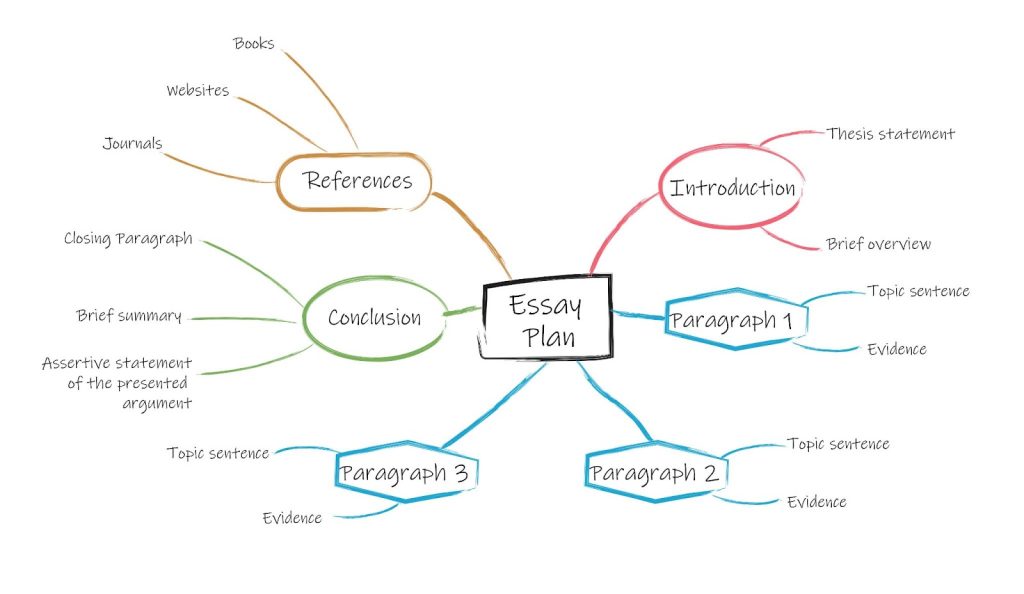
This goes without saying, but it’s a must. You need to plan the skeleton of your essay – ask yourself what each paragraph would focus on. Think of a suitable central theme for each body paragraph. Remember that planning your essay will not only ensure that you organize your ideas well – it functions as an excellent tool for brainstorming ideas in the correct order.
Make your introduction game strong
The next step is writing a great, compelling introduction. Writing a good introduction is very important in any form of writing, so you need to pay attention to it. Begin with a hook – the rabbit hopped and leaped into the garden as it had just been set free. Spring has begun! You may add some interesting facts about your topic, like a rhetorical question, or a humorous description to keep the readers hooked to what is about to come. Your introduction should include a suitable thesis statement that defines the rest of your essay, making sure that it sets the correct tone and mood as well.
Add sensory details
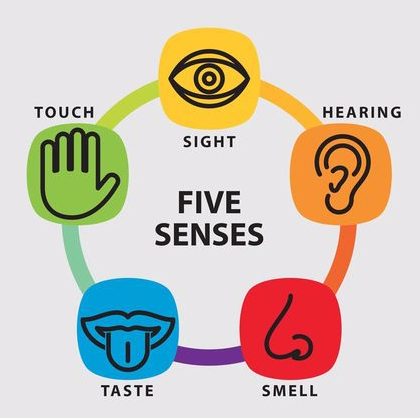
All of us are familiar with the five senses which are sight, sound, smell, taste and touch. Adding these to your writing is very important as these will add depth and detail to your Descriptive Essay. Use them in a way to bring life to your writing, and create a 360-degree scenery around. Write in a way that the reader can effectively paint the same picture in their mind that you’re trying to create. For example, if you are explaining a garden, add the sensory details, like the soft pink colour of the roses, the sweet smell of the jasmine flowers, the lush green of the grass, the buzzing of the bees drinking nectar from the honeysuckle, the cool breeze and how it feels on your face, etc. The correct usage of sensorial imagery ensures that the reader wants to continue reading more.
Show not tell
The devil for Descriptive Writing is in the details. Don’t just state what you are trying to say, instead paint an image with your writing. For example – If a girl is scared, describe her actions instead of just telling her that she is afraid. Imagine the expression that a scared little girl would have, imagine she’d be trembling with fear, explain the colour being washed off from her face. Use your imagination till the best of your abilities – that’s how your Descriptive Writing skills will come to light. Readers will not get the sense if you only state something, so get into the nitty gritties and create a living picture with words.
Add figurative language
Figurative language refers to the use of words in a way that deviates from the conventional order and meaning of words in order to convey a more complicated meaning. It promotes colourful writing, clarity, or evocative comparison. So, adding it to a Descriptive Essay is very useful. For example, instead of writing “the man was cruel and insensitive”, replace it with “the man had a heart of stone”. The different types of figurative language that you can use are – Simile, Metaphor, Personification, Hyperbole, Allusion etc.
Stay concise
You might be wondering how one can write a Descriptive Essay in a concise form – both of these are literally the opposite. But trust us when we say that nobody likes reading long essays. We’ve marked many papers on Descriptive Writing, and have noticed that the essence remains better in an appropriate length of an essay. Set your word limit and try to stick to it – the beauty about this essay is that you combine your ideas logically and make use of complex and compound sentences. If the passage is already given, annotate the important points and add them to your essay. Writing concisely is an art but you can master it if you practise enough.
Conclusion
As important as you know the introduction is, so is the conclusion. Like for any other essay format, all 3 are crucial to the organisation of your essay. The conclusion gives an appropriate answer or closing statement to the thesis statement in your introduction. If you end your essay with a suitable conclusion, it also helps with your score. Summarise all the key takeaway points from your essay and you have a complete, cohesive answer ready for review!
…And there you have it: 7 Effective Tips to Improve Your Descriptive Writing. The next time you are stuck while writing a descriptive essay, remember these points and these will definitely help you plan, write and enhance your descriptive writing.
Do you need further guidance for this component? Look no further – Young Scholarz has workshops designed for specific modules in group sessions and solo sessions. Along with assignments we will provide you with detail-oriented feedback for a higher score.
Are you still mulling over it? Click on this link to know more.
Be it as a group exercise or for an essay writing paper, brainstorming is an effective way of putting your ideas out there. They don’t have to be great, they don’t have to be groundbreaking, but they’re all building towards a goal that you need to achieve. Whether it’s brainstorming for IB LangLit Paper 1 or for IB Lit Paper 1, this is one of the first steps to answering a question. Let’s discuss how to brainstorm for IB English Paper 1.
But before that, what is brainstorming?
Brainstorming in the very essence of the term, is storming your brain with multiple ideas pertaining to a specific question. These ideas could be great ideas. They may also be inconsequential and redundant. But, the purpose behind this exercise is to produce and fabricate thoughts pertaining to that text, literary or non-literary.
Brainstorming for IB English Paper 1
For IB Literature Paper 1 as well as IB LangLit Paper 1, the text in both papers is unseen and cannot be prepared for in advance. In that case, the only material that you have is in hand while sitting for the exams – which is great, because that builds a framework for more accurate ideas.
Types of brainstorming
Positive brainstorming
As the name suggests, positive brainstorming is writing down points that you know. Anything that is relevant to the text – your thoughts, opinions, literary terms, and tools that you can identify – jot them all down. Its use can be decided in the next step.
For example, consider the text in the poem ‘The Road Not Taken’ by Robert Frost. Ask yourself: What do you know about it? The road can be a metaphor for life, a path to choosing your career, or any decision that you take. While reading the poem, you have come across many examples of imagery, simile, and personification. So, you write them down in your brainstorming session, along with relevant examples and how they contribute to the overall meaning of the text. This is positive brainstorming.
Negative brainstorming
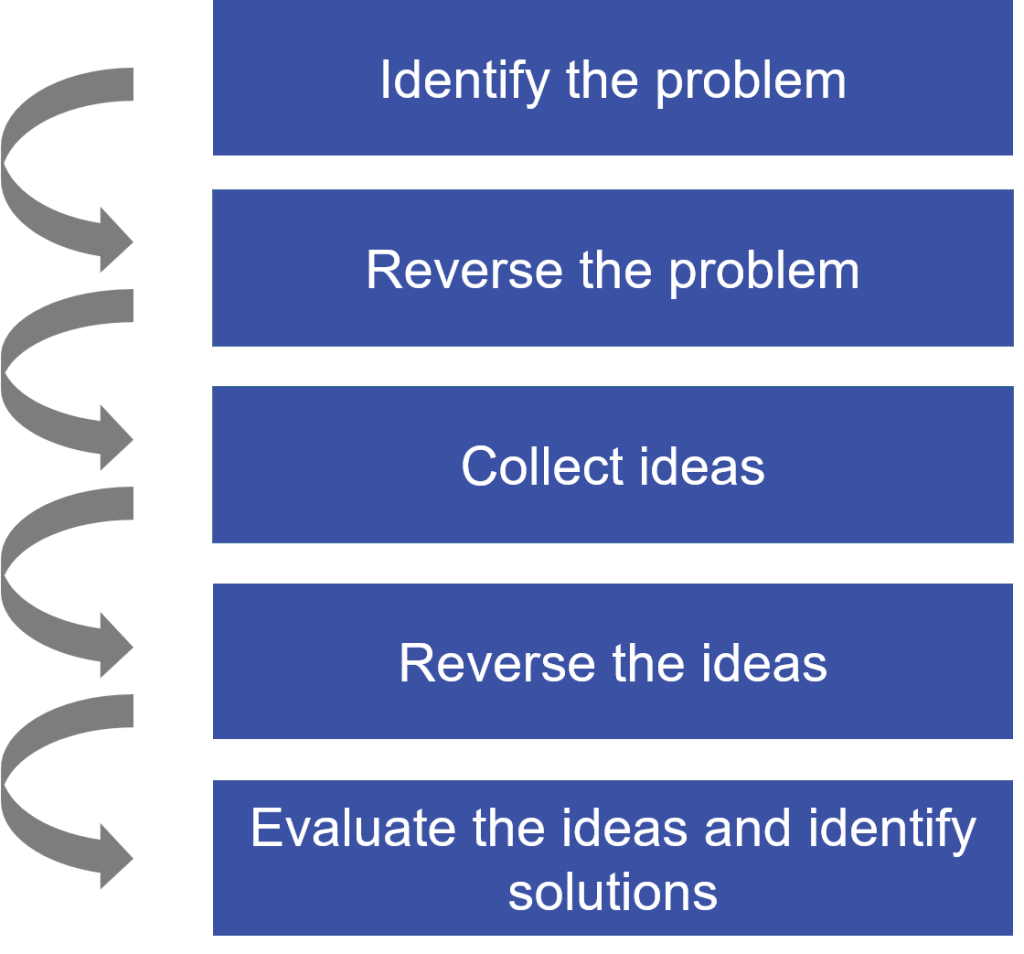
Also known asreverse brainstorming, negative brainstorming is the opposite of the previous technique – write down everything you don’t know about the question. Now you’d ask, how is that possible? If you’re aware of what you don’t know, brainstorming will help you find an answer and work your way around it. For example, you’ve picked out the literary devices fairly well, but you don’t know much about the rhyme scheme and how it creates meaning. Brainstorming will help you focus and gain a better sense of direction.
This is an easy yet crucial step to brainstorming. While reading the text the very first time, with a pen/pencil in your hand, underline the important words and phrases that will later on help you generate ideas, analyze them, or come to a suitable conclusion with them. Although this is a common practice, it is often overlooked. Annotating a text is key to identifying important words, patterns, and concepts.
2) Free writing
After you’ve read, understood, and annotated the text, remove 10-15 minutes and dedicate it to a grueling, highly productive brainstorming session. Ignore grammatical errors, ignore self-judgment, put all inhibitions aside, and just freely write what you think and what points you can deduce from the text. Once you’ve laid the foundation, you can easily choose and cancel what you need and don’t need.
3) Graphic Representation
There’s a talented bunch of you who can be the graphic designers of a literary essay. Some like to use Mind Maps, which we absolutely endorse, and some prefer Venn diagrams for their brainstorming points. Some even like creating columns to separate out body paragraphs according to the topic ideas. All of these methods are excellent while brainstorming – you also get the added benefit of planning and organizing your essay while you generate your ideas.
4) Use the Description
The description of a scene or a passage is an effective way of formulating ideas. For example, the question involves a journal entry by a botanist. Think of all the senses involved in the study of a Venus flytrap. The sight, touch, smell – you cannot taste or hear it, so that is stricken off. But the rest are clues to describing the plant, how it catches its prey, the correct conditions that sustain the plant, the kind of insects or animals it feeds off – and how these aspects are used by the author to create appeal.
What should you do after brainstorming?
Short-listing!
Once you’ve come up with some ideas, the next step is to scrutinize their relevance and significance. Is the micro-analysis of the title important to the appeal of the poem? Is the color of the leaves important to the carnivorous nature of the plant? Circle what’s important, and cancel what’s not.
Even if you’ve crossed out many points, don’t lose heart. It’s not a waste of time if that idea has given birth to a newer, different, and more effective idea than the one crossed off. This being a flow of ideas, traversing from one to another, it is a natural way of panning out your essay and reaching a suitable conclusion.
Brainstorming is the nexus of ideas
Dr. Asa Don Brown
So, the next time you practice an IB English essay, keep these points in mind and let us know how they helped you!
Ready to start your lifelong journey with us?
We guarantee an improvement in grades, with most students improving by an average of 2 bands.