I don’t have the time to fret about a mock exam while I am already preparing for the actual one. Is this a thought that crosses your mind often? Allow us to present a fresh perspective of why mock exams are important for you. We present three reasons why you should be sincere about them. The format of a mock exam is identical to that of the actual exam. It serves as the primary means of practice for the students. Let’s explore in detail how mock tests can prove to be fruitful in your academic experience.
#1 Familiarize you with the actual exam requirements
To begin with, the structure and design of the IB as well as the IGCSE mock exam is made to help the student get familiar with the actual exam. In this way, these exams help you to prepare for something unexpected. Once we are comfortable with the exam setting and have experience with how things work, the actual exam becomes less daunting. Conditioning our brain to be comfortable in an unknown scenario of the mock test takes away the fear of taking the board exams for the first time.
Everything we do is practice for something greater than where we currently are. Practice only makes for improvement.
– Les Brown
#2 Show us our areas of improvement and strengths
Furthermore, these can be prep sessions that enlighten us about our strengths and weaknesses in every subject. Analyze mock test results to identify areas for improvement, enabling targeted study and enhancing overall preparation for success. In addition, this introspection of our strong and weak points will help us form clear and precise questions. This will aid in our tutoring experiences.
#3 Get comfortable with sitting for an exam
Finally, there are many new changes introduced by the IB and IGCSE curricula every year. It becomes necessary to sincerely appear in the mock exams as they are a part of training for the upcoming exam. Although It would be easy to argue that many of these goals might be achieved without formal exams we are mistaken in thinking that. The formal place and time setting of the mock exam is what makes it so integral. The environment of this mock exam is that of a real one and this rehearsal leads us to identify how we react to many factors surrounding us.
Diligent students, who’ve invested effort in syllabus preparation, are certain to reap the benefits of mock exams. Study well and ace those mocks! If you’d like support, contact us – we offer mock exams and paper marking for all IB DP subjects and IGCSE subjects.
“Tell me and I forget. Teach me and I remember. Involve me and I learn.”
Benjamin Franklin
Being a teacher is easily one of the most underrated, and often underpaid professions and this is quite unjustly so. Their task is so much more important than one may realise and if it were not for teachers’ sheer hard work and passion, most students would not be able to achieve the goals they aspire to.
A well-skilled, knowledgeable, and experienced teacher makes all the difference to your appreciation of a subject. A teacher who is passionate about their subject will inspire you often with an interest that will last a lifetime! Hats off to all teachers … but which hats are they wearing? Teachers coach many different subjects, but this is particularly key to those who teach STEM as this requires a broad skill set.
But First,
What is STEM?
STEM is an acronym that stands for Science, Technology, Engineering, and Maths. The other variations include STEAM – where A stands for Artistic Design and STREAM – Where R stands for Reading.
STEM is a step ahead of traditional schooling, where the aforementioned subjects are taught individually. STEM explores interdisciplinary connections by teaching these subjects together so that students learn to coordinate and synchronise skills gaining a new perspective on traditional thinking. The sciences are intricately connected to maths, for example, integrating physics and mechanical reasoning with mathematical formulas can lead to an understanding of engineering and technology.
STEM education not only teaches students to build new skills in the fields of robotics and coding, but it also teaches them competencies such as problem-solving, innovation, creativity, and other lifelong skills. Take the Tokyo Coding Club, for example, who provides live, online, and one-to-one as well as group classes for STEM courses that will keep you hooked from the beginning to the end.
How Is STEM Different From Other Methods of Learning?
“It’s not that I’m smart, it’s just that I stay with problems longer”.
Albert Einstein
Would you rather attend a lecture on how to build a website, or actually sit at a desk and learn to build one?
STEM education is not confined to the boundaries of a textbook, it takes you into the real world giving you hands-on experience, to think out of the box in contrast with more traditional learning systems which rely on increasing knowledge without much practical engagement.
When you put a problem in front of a STEM student they can apply cross-subject skills sets to problem solve through exploration and discovery, to create through innovation rather than only historic knowledge.
In a world increasingly driven by Artificial Intelligence (AI), having a STEM education increases your career prospects across all faculties paving the way forward for a new generation of thinkers.
So…how do you choose the right teacher?
What Makes a Great STEM Teacher?
All teachers have wonderful qualities, but STEM teachers particularly are at the cutting edge of shaping future generations and world changers – they need a few additional skills to ensure they can inspire that creative spark within. When looking for a course or teacher, look for teachers who have some of the following qualities:
They enjoy what they teach
Teachers should be learners, practicing what they preach. Though obvious, this is one of the most important points to keep in mind. Before you begin to teach, you must begin to learn. A STEM teacher must learn the subjects thoroughly before entering the class. Understanding the basics and putting them to practice before training somebody else will always be mutually beneficial. Patiently exploring both mistakes and successes is part of being a good teacher, this helps students on their learning journey but also helps teachers to evolve and adapt to refine their teaching style.
Patience and listening skills
One of the most important virtues of a teacher, patience is key to teaching well and teaching effectively. Different students have different speeds of grasping information and learning. Your teacher may have to simply wait for you to complete that circuit board, or be patient while you try to grasp the multifaceted nature of the subject. A good STEM teacher needs to be a good listener, and be open to hearing your doubts and listen to you with understanding while you narrate your struggles.
Facilitates the learning process
If you make a mistake, and you’re corrected while making it, you won’t learn anything from it. An ideal STEM teacher will let you make a mistake and figure out how to rectify it unless you’re sticking a finger into a socket! Any sort of interference with your exploration journey will hinder your learning curve – and you will probably repeat the same mistake, without realizing where you went wrong.
Success often comes after a myriad of failures; such challenges are to be embraced, and not be embarrassed about, and a good teacher must encourage an independent learning process.
So next time you feel vexed at your teacher for letting you spend all that time calculating the wrong formula, know and trust that they know better.
Adapts to different learning styles
A good teacher will evolve along with their student, and this is especially true for STEM teachers as our understanding of concept relationships is ever-growing. This is one area where students may even know more than their teachers and it’s important to understand the two-way street learning method. Students may be equally innovative coming up with novel solutions and every new problem requires a new solution.
Look for a teacher with whom you can communicate well and share your ideas – a teacher that is part of your learning experience and process.
Takes you outside the classroom
Learning takes a new path when you’ve put your books aside and gotten into the field. A real-life mathematical problem will teach you much more than one solved on paper. An ideal STEM teacher will make sure you step outside the classroom and bring the theories taught to you to life.
When you’re taught a simple acid-base reaction, you may or may not retain it. You may not even understand it. But if you’re shown how acid and base mix together to form a salt, like potassium permanganate, and water, you’ll remember the purple-hued magic happening in front of your eyes.
At Young Scholarz, we’ve collaborated with Tokyo to provide classes bearing in mind that the end goal is to grow – not to just learn static content.
Provides you with a unique learning experience
Not all five fingers are the same. Similarly, not all students work the same way. A good STEM teacher will come to appreciate where you excel and where you lack the skills. Humans in general excel in one of three types of intellect – practical, creative, and analytical intelligence.
As STEM uses all three in one or the other way, your teacher should know where you need attention and where you need praise. By providing opportunities to explore your strengths and weaknesses, you may naturally lean towards the subject where your key interests lie. Our STEM classes do just that, we specialize in one-on-one teaching so that you get the attention you require!
Is up-to-date with developments in the STEM industry
As in any other subject, a great STEM teacher is required to be well informed with the latest developments in the relevant fields of sciences, mathematics, and technology.
Reading the news and updates regarding a new scientific find, or the development of a new vaccine helps the teacher design new methods of teaching. Following top leaders and powerful influencers from the STEM industry can help one gain insight into the newest happenings as well. Just as every book has a new edition, your class plan too must be constantly updated and changed in line with the current scientific progress, which is then integrated into classroom learning.
In a Nutshell
“Millions saw the apple fall, but Newton asked why.”
Bernard Baruch
STEM learning is the next step in the global educational revolution, and having an excellent teacher to learn from and support us through our hurdles is just what we need to build a bright and promising future for the generation ahead.
Good teachers not only teach us, but teach themselves first, and are on a continuous journey of self-improvement. Choose well and do justice to their effort, time, and hard work – together we can pave the way ahead!
Final Exam. Check. SAT. Check. Subject to major in. Check. You think you have it all figured out, but wait. There’s more. No matter how well you’ve scored, or how excellent a student you are, it boils down to this – the University essay. This is the only place where you can tell your story, and that’s what the college wants to hear. Tests are generic – they question your capacity to think. But your essay represents you – as a person – a living, breathing, passion-filled, person. Let’s look at some tips on how to write a winning university essay.
And now that many colleges have become test-optional, the pressure is even more, because you cannot lean on your excellent abilities to study.
Consider this as your business pitch with you as the product – why should you be one of the chosen ones? What’s your unique selling point? This is where the challenge begins.
Focus on these tips below to help you come up with a killer University essay for admission to your dream college.
Read the instructions
In all the excitement and overwhelm, you might easily skip through this part. Just as unique as every student is, so is the college that you’re applying to. Different institutions will have different expectations from you, so please read the instructions provided before you begin working on your essay. Often overlooked, this is the most important aspect of your Common App essay.
How many words/characters to write, what’s the purpose of your essay, whom you are writing to, and the title. Give the instructions a thorough read before hitting the keyboard. Failure to adhere to the word limit will raise a red flag and have the admissions officer question if the student’s inability to follow instructions makes them fit for the program at all.
Know the university and course requirements
Research the university and the college that you’re applying to – set the foundation before you build a house. You’ll get a much clearer idea about what to write and what to include in your essay.
What is the university’s culture like, their alumni, and their specialties? What are the skills required for the course you’re keen on?
List down the core competencies of the course, and address them meticulously in your essay. Additionally, be it the skill of written communication, or critical thinking, show that you know how to apply these by using them to attract the reader.
Plan your essay
Once you know what you want to say, make an essay plan! In the sea of information, you may not have a clue about where to start, which essays to look at, and how to formulate your ideas. No one wants to read an unplanned ‘Eton mess’.
Having a skeletal structure of the main points of focus will help you form a cohesive plan and give you direction. Sticking to an essay plan will help you arrange your thoughts and ideas logically, and keep you on track, especially with a limited word count.
Ensure
– You address but do not need to actually answer the prompt – it’s not a question
– You start with an interesting hook, that makes the application officer want to know about you
– You lead the essay through genuine experiences and illustrate that your essay is specifically targeted at the college/course of interest
– You do not write a rigid 3 body paragraph essay
– The essay should flow to demonstrate how you have evolved and will seamlessly continue to do so at the university of your choice
– You do not conclude just by repeating the introduction of your essay. Add something thoughtful showing that university life is the next natural step in your progress.
– To only brief through everything you’ve mentioned in the essay
Be authentic
Look to express yourself and who you really are. You want to show you are the best fit for what the university is looking for. You may read sample essays written by others – but they are not YOU! Read essays, articles, and blogs to add depth to your perspectives but do not lose your own voice when you write. The college you’ve applied to isn’t interested to see what other people have written in your essay. They’re looking for well-rounded individuals who are ready for the experience that their university can provide. Make sure your essay has you as the narrator, with your opinions and experiences are woven into it. Express your thoughts, beliefs, passion, and how this program would help you reach your goals as well as how you can contribute to the faculty in return.
Come up with an interesting introduction
Remember, you’re one among thousands of applicants. Make yourself stand out. The admissions officers will go through your essay very briefly because they’ve got so many to read! One way to catch their attention is to write a compelling introduction.
Use an anecdote, a story – an opening hook – that will keep them hooked for the next few hundred words of your essay. Choose an anecdote, viewpoint, or perspective that brings out your personality showing just how unique you are.
Having said that, don’t spend too much time perfecting your intro right at the get-go. Often, you may not know what to write until after you’ve finished the essay and will come up with a much better intro once you have written the whole essay. Your main focus should be the core of the title.
Read – Review – Revise – Repeat
You may feel you have written your life’s masterpiece, but don’t take your own word for it. Have it read by a range of people including parents, university counselors, and other unrelated adults. Having varied perspectives through fresh pairs of eyes helps you to iron out illogical flow and add details to make your essay complete. Make those much-needed revisions and edits.
Once you’ve finished your essay, have it proofread by an educator or mentor for grammar, word count, and final technical revision. At Young Scholarz, we can help you to improve your writing skills and help submit that killer essay that stands out above the rest!
The takeaway
The university essay is a preview of your personality, and a great opportunity to showcase your talents and achievements. Don’t rely on anyone else to direct your essay – you must be you! Admission officers will very easily see through a fake persona. Good research is at the core of a good essay, showing a genuine passion for the course and university. Take guidance on essay writing techniques and brainstorming of ideas but don’t let anyone else tell you who you need to be.
Priya, the youngest child, stayed back at home after her parents died in an accident. She had to look after the household chores while her brothers went to school and college and got themselves paying jobs. Priya was married off at a young age and did the same for her husband as well, till he, too, succumbed to Covid-19. She had no income, and nobody to look after her. Instead, she had the responsibility of a 3-year-old and no roof over her head. This isn’t the story of one woman, but many women in India who are made to sacrifice their education. Most of them simply cannot afford it, and end up destitute due to unforeseen circumstances. In any calamity-like situation, where schools are shut down, school dropout rates significantly increase for girls. Boys are more likely to get back to school, but girls are made to stay home for a myriad of reasons. While this mindset cannot be changed in a short period, steps can be taken to reduce the impact on the female child. That’s where these wonderful organizations mentioned below come in. Let’s take a look at these NGOs in India for girls and women.
They help pioneer girls’ education and empower women to live self-sufficiently and confidently, all the while slowly changing the narrative for females across the country.
What began as a shelter for girls 30 years ago, has now become an Aarti haven for girls. Those who have been victims of abuse, trafficking, abandonment, and many such heinous crimes that we can’t imagine. Over the years, they haven’t just supported young girls, but even their mothers who have gone through similar injustice. Recently, they were able to fund not one but two oxygen plants for Covid-19 patients.
Their dedication extends beyond their roof to the homes of many girls who have at least one parent alive. They help by giving food, clothing, and books to these girl students, without removing them from their families.
Safe Hands Foundation is an organization that ties hands with other organisations to help the destitute. Started by a group of individuals, they aim to help achieve higher education and build a better future for the society we live in. Their focus is to provide basic needs and services and supporting them in achieving their dreams through higher education.
Project Akshara has two programs under them.One where Akshara students are under constant mentorship with the help of personal counseling and motivation classes. The other one teaches students to access emails and digital books, and converse in English for developing further skills.
Apart from this, they have multiple projects that involve donating toys to children and blood to patients. Providing medical assistance in villages and basic furniture pieces to government schools. As well as aid to special students like those who have lost their eyesight and hearing.
Run by a team of like-minded, socially responsible youngsters, Anandham gives a hand to those students who score well in their Plus Two exams and cannot afford higher education. They have initiated various supplementary training programs to provide overall development like life skills coaching, yoga, meditation, and communication skills.
As we’re blogging this post, Anandham is supporting around 365 students pursuing MBBS, Civil Services, Agriculture, Engineering, Arts and Sciences, and various other streams. They provide 100% scholarships to underprivileged and rural students who cannot bear the cost of higher education.
Backed up by a well-known multinational company, Mahindra & Mahindra Ltd., Nanhi Kali was begun by the Chairman Anand Mahindra, who aims to educate underprivileged girls in India. He believes in the relation between social evils like dowry deaths, the caste system, and the absence of education for many girls.
This project is designed to educate girls from low-income families, ensuring that they complete ten years of formal schooling. So far, it has improved the lives of around 450,000 girls across 14 states in India.
From academic support to providing digital tablets, trained women tutors, encouraging sports, and giving every nanhi kali a school supplies kit (including napkins), this organization is one of the most cost-effective sponsorship models, providing all these benefits at a meager cost of Rs. 500 per month (9 SGD).
Protsahan, which means encouragement, is not just the name of this foundation, but also their motto. To provide an encouraging life to the women and children who’ve suffered mental and physical abuse. This is done through education and safe healthcare practices that empower the women in need and develop their physical, mental, and social well-being.
What began as a project to save the life of one girl child has now turned into an organization that has rescued 928 girls and reached out to 72000 girls in India. With their well-engaged team of talented young minds, they hope to reach out to a million children by the end of this decade. They have a presence extending so far as Georgetown, Washington DC.
This registered non-profit organization was established by Mohanji in the year 2003. It began in the memory of his daughter who passed away at a tender age. The organization has set base in Palakkad, Kerala, and has extended its arms out on a global level. Ammucare helps children with basic needs such as food, shelter, clothing, and resources and services that include medical aid, education, and other means that support and empower the helpless and needy.
Their two core pillars of thought are “Unconditional Love” and “Care Beyond all Man-Made Barriers”. They’ve rightly based their foundation on love-knows-no-bars. Please head out to their website for a detailed overview.
Formed in 2014, this trust works on an Endowment Style – where they invest the principal amount in safe assets. They then utilise the interest earned on all the work carried out by the trust. Their objective is to provide quality education for children at both primary and secondary levels.
With a strong mission, they aim to encourage and support deserving students and impact the lives of underprivileged students. They have a well-planned vision too where they want to provide education for all, and specifically promote education of girls.
They have helped improve the lives of many students belonging to different streams and are growing their online presence.
Just as their name suggests, this big-heart organization is a non-profit organization that seeks to help out towards the causes of women, children, and those from marginalized communities. They do this through volunteering, carrying out events, and various fun-raising projects.
The main causes that they work for are the education of the girl child and their fight against hunger. They also extend support to many need-of-the-hour situations, like the Covid Relief donation booth that they set up recently, and provide care packs for those fighting at the forefront against Covid-19.
They have a dedicated section where you can see their blog posts where people share their experiences with this organization. Their reach is global, and you can take a look at their website for detailed information on the nature of their work.
Founded in 2011, their primary objective is to create equal opportunities for underprivileged children from both urban as well as semi-urban areas.
They are a registered organisation and provide tax-exemptions not just in India, but to the UK and USA. Their focus is the young and nurturing the young through education. Apart from that, they also provide them with healthy meals, healthcare facilities, and skill development to children as well as adults from poor urban areas in India.
With a well-backed founding team, a professional governing body, and a leadership committee with dedicated roles, this foundation seems to be doing everything the right way. They believe in absolute transparency and make use of data collection to improve the outcome of education and nutrition for the underprivileged.
It all began when American-born Carol Faison decided to extend help to an orphanage based in Manginapudi, Andhra Pradesh. With sheer dedication and passion, she started this organization with an acquaintance Noel Harper. Care & Share has helped more than ten thousand children in Vijayawada, who fall below the poverty line. Their aid extends to children from all backgrounds, including those of sex workers, physically challenged children, and abandoned and orphaned children.
The organization has also been serving the slum-dwellers of Vijayawada, and they aid in the fight against the spread of HIV, and help those children diagnosed with it. Since 1997 they have run 9 schools and rescued a thousand street children. They have shelter homes that cook and feed thousands of kids in a day.
This organization believes that the best way to help society is by providing education to a child who cannot afford it, and they have rightly said so. With their scholarship program called ‘I am the Change Scholarship’, they provide scholarships for children with only one parent, or no parents, who come from financially challenged backgrounds but are good with studies. To this date, they have sponsored the education of 850 students towards their graduation. This organization works solely towards their goal of education, for children in primary years up to those who want to graduate.
The organizations we’ve listed above are all about positive development, and if you wish to be a part of their noble cause, you can head on over to their website and either volunteer or donate.
There is no better way to enjoy one of Shakespeare’s texts than actually going to watch a theatrical performance. The entertaining drama, vibrant atmosphere, and the foolery of hilarious characters! Social distancing or a cast member being called out sick didn’t worry anybody.
Students lament and complain but there is no avoiding ye olde English as Shakespeare’s plays occupy a crucial part of all IGCSE Literature curriculums. Unknown to most (young ’uns especially), we actually wouldn’t be able to imagine popular culture without them either.
We’re looking at Othello this year as it is one of the core texts for 0475 IGCSE Literature.
On the surface, Othello appears from a different era with unique cultural and historical references. However, its themes and references to the human condition are universal, transcending time. Don’t take our word for it though, read on to see just how long-standing a relationship we have with much of Shakespeare. If reading the play seems like a struggle, immerse yourself in the beauty of his distinctive writing style. And, let’s face it a more appealing option – watch a film.
Why watch a movie?
Of course, we’re not telling you to watch a movie and skip the play totally – you must read the play first! While traditionalists may not fully agree, there are so many benefits to watching a movie too. Approach a play in every format possible to gain complete appreciation.
Shakespeare’s texts are timeless and can and have transcended the dimensions of time and space. Seamlessly molding its commentary and application to any culture. Different settings enable us to witness various perspectives of the same characters and themes.
Films also help to keep classic texts relevant to younger audiences. Trust us, you will always be able to identify and relate to what seems old-fashioned once you can see its relevance to contemporary life.
We’ve found a few film adaptations of Othello as it’s one of the most popular core texts for 0475 IGCSE Literature. A plotline that epitomizes tragedy, let’s take a look at these films which give refreshing perspectives through shifts in setting, plot, and language. Some even add unexpected elements of surprise.
A Double Life (1947)
A classic example of a play-within-a-play is the American film, A Double Life (1947). It revolves around theatre actor Tony John, who’s offered the role of Othello and cast opposite his ex-wife, Brita, for the role of Desdemona.
This seems harmless until Brita warns the team about Tony’s harmful obsession, blurring fantasy and reality. As the film progresses, Tony becomes consumed by the role and unintentionally murders his mistress. This mirrors the scene in “Kiss of Death,” unraveling the tragedy from start to finish.
The actors in the film Ronald Colman and Signe Hasso are applauded for their brilliant performances in their respective roles. Having won several awards including the Golden Globe Award for Best Actor, this movie is a great film to watch at the beginning of your IGCSE exam preparation.
All Night Long (1962)
A British adaptation of the British play, All Night Long (1962) incorporates the world of jazz in London in the 1960s. Celebrated musician Aurelius Rex is in a happy marriage with his young wife Delia, who’s also a retired singer.
Throughout an eventful evening, the Iago of this film, Johnny Cash, attempts to cause a misunderstanding between the happy pair. Johnny Cash gets Rex to believe that his wife is cheating on him with the band’s manager, Cass. Why does Johnny Cash do that? Because she turned down his offer to resume her career and join his band. Anyhow, he’s almost successful in getting Delia choked to death by Rex, but his wife reaches in time to save her. Thus revealing her husband’s evil machinations.
The film has a relatively bittersweet ending – we won’t reveal any spoilers here. But, the musical aspect is what makes the movie interesting to watch. This film also stars jazz legends such as Tubby Hayes and Charles Mingus.
Omkara (2006)
There’s always a Bollywood version of everything. Bollywood, being a version of Hollywood itself, has its take on Othello. Vishal Bhardwaj’s Omkara explores the lower caste-upper caste angle set in the wild, hinterland regions of Uttar Pradesh. Soon, casteism, thugs, and politics pull us into a web, and all hell breaks loose.
The film’s Iago, Ishwar Tyagi, plots against ruining Omkara and Dolly (Othello and Desdemona) as he gets rejected over Kesu (Cassio) in the upcoming state elections. Omkara, due to his lower-caste-based insecurity, quickly doubts his wife’s loyalty and chokes her to death when he’s made to believe that she’s having an affair with Kesu.
Having Ajay Devgan play the lead, and Kareena Kapoor as Desdemona, the film gives you a glimpse of Othello set against a rural, rustic backdrop. Despite the catchy Hindi songs and dramatic, indigenous dialogues, the film stays true to the original essence of the Shakespearean tragedy.
O (2001)
This modern, glamorized portrayal of Othello is clothed with classic teenage drama. It throws light on adolescent emotions like jealousy and vengeance that arise in any high school setting but with a dark, twisted turn of fate. Odin James, the basketball player, falls in love with Desi Brabble, the most popular girl in high school.
Our supervillain Iago happens to be his best friend Hugo whose father, the basketball coach, favours Odin over him. Hugo leads Odin to believe that Desi and Michael (another team player) are cheating on him, and this eventually leads to a series of murders and a lot of guilt in the end.
This movie doesn’t use original play dialogue; it’s adapted into upper-class high school language. While the adaptation exaggerates Hugo’s emotions in the context of basketball compared to Othello’s politics, it sheds light on teenage violence post-Columbine. Notable for the lead’s acting, it portrays Hugo as more psychotic than Iago, evoking pity at times.
Other Movies
There are many more adaptations like Othello (1995), Souli, a Malagasy film, and Iago, an Italian teen drama film, which have been modified in terms of language and plot. Souli, in particular, is a feature film that was screened at the Paris Film Festival. It throws light on the native African poetic tradition (oral tradition, bard). Apart from these, there are many more films as well as plays that enact Shakespeare’s Othello.
Apart from film versions, you will find many plays on the web too. If you want to see how actors performed the original Othello, you can go online and find many filmed plays.
You can never watch too many versions – even though films are based on the same plot, they all uniquely capture the essence of Othello. It’s very interesting to see the same characters played by different actors who bring their charm to the role. If the thought of studying Othello seems dull, watching one of these movies will add surprising joy! It’ll encourage you to revisit the text itself and connect how the playwright’s vision is interpreted and portrayed through different lenses.
On another note, you might start to notice that the Bard wasn’t as clueless as you may have thought. Look out for those Iago’s lurking around the school canteen, and be sure to treat your Desdemona with the trust and respect she deserves!
Consider the SAT Exam to be the last hurdle of your school years if the United States is where you dream of studying. The SAT is still prescribed as part of the admission requirement for many US colleges and is a significant factor in helping to decide which university you will go to. It sounds daunting as it starts a hugely important journey towards your dream life and career. Like everything frightening, if you know enough about what to expect and then you work efficiently towards it, you will succeed. This article deals with some of the common questions that you might have about the SAT before you kickstart your journey.
But first, what are the SATs?
The SAT (Scholastic Assessment Test) is an MCQ-based, pencil-and-paper standardized test created and administered by the College Board. It determines your aptitude and skills in three core areas – Maths, Reading, and Writing. Your SAT Scores will determine which reputed college/university accepts you, hence it is very important that you prepare well.
The SAT has two main sections – Maths and Writing and Evidence-Based Reading (The combined English language section).
Who can apply for the SATs?
Students seeking admission to US colleges and universities apply for the SAT. Since they’re a standardized form of testing, they’re applicable for international students applying at colleges mainly in the US. Some colleges in the UK and Canada also accept the SAT.
How many hours is the SAT?
The SAT testing time is 3 hours – the reading section is a 65-minute test, the writing section is 35 minutes, and the Math section lasts 80 minutes. Between all three components (reading, writing, and math), applicants are given a 5-minute break.
SAT Scoring
With a total score of 1600, the average that one can score is 1060. Each section carries 800 marks (Reading/Writing being one section and Math being another). Universities like Harvard, and Stanford University, call for a score of at least 1500 to be eligible for admission. But if you score above 700, you may secure a seat in a state college too.
When are they held?
The SATs are held around 5 to 7 times a year. At least half the students appear for the test a second time or third time in order to improve their scores. But it’s advisable not to take it too many times because your score is unlikely to improve drastically after a third attempt unless there are drastic changes to your approach. It’s probably not worth sacrificing an additional academic year trying to score better grades. If you have sought support and tried your very best, move to another strategy for your university admissions.
The SATs are held in August, October, November, December, March, May, and June. You’ll find the current test dates here.
When do I begin studying for the SATs?
Most high school students take the SAT during the autumn/ winter of Grade 11 to leave enough time to re-sit up to another 2 times. Check general SAT as well as Subject Test dates and ensure you plan ahead so you have enough time for the next sitting before your predicted grades and application deadlines. Time is of the essence here, so prepare accordingly.
The SAT registration begins around 5 weeks before the exam dates, so if you want to take an exam now, you’ll have to try for the October batch.
Is there an age limit?
There is no age criteria or limit for appearing for the SAT. It is most relevant for students between the ages of 17 and 19 to sit the exam.
What’s the validity of an SAT result?
Your SAT score is valid for 5 years, but it’s preferable to utilize your score within two years of appearing. This ensures a more relevant score to help inform the admissions process.
Recent changes to the SAT
Previously the College Board held specific SAT subject tests where students would appear for the subject that they wanted to major in. Earlier there was also an optional Essay section, but it has been discontinued post-January 2021. The College Board has currently suspended these tests due to Covid-19.
The SAT exams will be held online to ensure the students’ safety.
Hence many universities like Stanford have decided to continue with their test-optional policy for the year 2022; do check if the universities you are applying for, still have an SAT requirement.
Should I take the SAT or the ACT?
Many are confused between taking the SAT and the ACT (American College Testing). The two tests are different in terms of time pressure and question style. However, many colleges don’t favor one over the other and accept scores from either, and once again do check to see if your college of choice has any specific requirements. If there is no particular guidance, consider both and take advice about which type of structure best suits you.
Currently, due to COVID-19 and the world’s ongoing struggle to manage the pandemic, many universities are becoming test-optional. Do check university websites for the most up-to-date information to plan and prepare alongside the demands of Grades 11 and 12.
It’s just the first day of school and you’ve already been bombarded with homework and assignments. It’s only a short space of time before you’ll have the exam timetable in your hands and once that happens, you will want the IGCSE’s to end as soon as they begin. Although the year has only just started, by the time you fit in learning, practicing, extracurricular activities, and hopefully some breathing space, what starts off as a two-year course, ultimately feels like just a few months! These handy tips can help you skip the IGCSE exams. Just kidding – we can’t do that! But we can certainly help by listing a few tips and tricks to help you prepare well to score and succeed without too much trauma.
Plan, Get Set, Go!
You’ll hear your teachers tell you from the first day of the IGCSEs to get organized and prepare your study material, and we’d repeat the same to you. Don’t wait for the last school holiday before you finally get to know your books and then run an exhausting study marathon with yourself. Trust us on this. Planning ahead will save you a ton of time as well as unnecessary panic!
Make formula lists for maths, sciences, and economics. Make mind maps or concise notes for content dense subjects like History and Literature. Refer back to school notes or textbooks, clearing any doubts along the way. Purchased study notes will not solidify your learning in the same way as making your own will. Setting yourself up in this way well in advance will leave you enough time to revise, practice, and rest your mind before the big day.
You will have to sacrifice some of your spare time at the start, but you’ll thank yourself later.
2. Focus on improving your weaknesses
Face your challenges straight on – don’t let them build up so that they become daunting! Identify the topics you find particularly challenging and work on them before moving to the easier, more enjoyable ones. By allocating more time to strengthening your weaknesses rather than dwelling in your comfort zone, work efficiently towards a better grade. Set achievable goals for yourself, and give time to each one. Start early so you don’t have to rush and stress. Don’t be shy of asking for help from
fellow students, seniors, parents, or a teacher who you can approach easily. If you don’t ask, you won’t know.
3. Organise yourself with useful study tools
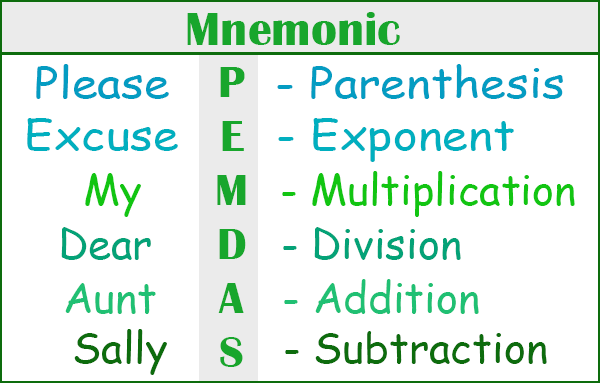
Sort out that pile of crumpled study notes that builds up at the bottom of your school bag. File those scraps away according to subjects and make some notes! Mind Maps are our favourite way of condensing bulky information into a concise memorable format. The sheer task of creating them is already the best form of revision. Write neatly, small, and in pencil in case you need to rearrange. Converting that pile of notes into one sheet of key points and headings is so satisfying and also makes the subject matter so much more manageable. Mnemonics are another great way to simplify learning. Complex lists and processes such as periodic table groups, math rules, the order of planets can be reduced to easily memorable phrases.
With both mind maps and mnemonics, you can associate simple words and phrases to easily connect ideas and structure content in a logical sequence.
4. Practice, Practice, Practice
As cliche as it may sound, practice is the key to IGCSE exam success. There are adapted questions given in textbooks, but nothing beats going straight to the source of past exam papers. Once you have learned strategy, time yourself under exam conditions and practice as many papers as you can. This will benefit you in many ways: you’ll get familiar with the exam pattern and learn how to answer questions during the actual exam, and you will also improve your handwriting speed, something which you definitely don’t get enough practice at.
It’s easy to self-mark for subjects like Math and Science because they’re fact-based and marking schemes are comprehensive. The difficulty arises when marking subjects like Literature, which can be completely wrong, but never completely right. Having your papers reviewed with detailed feedback by an experienced educator will improve your skills. You may consider paper marking services for written subjects such as English, Business Studies, and History.
Once you practice more past papers you’ll realize that most concepts are repeated, and the questions are paraphrased. You’ll have a better sense of which topics are good to know and which ones are must-know.
The Questions
While we’re on the subject of question papers, do ensure that you read the questions thoroughly. Students often miss chunks of marks writing essays when the question asks for a letter, or the point of the essay has been missed. Read the question in detail and let it register. Plan your answers before you start writing, and your answers will turn out crisper and well-structured.
5. Don’t study the whole day
You heard it right. You think studying all day every day will give you the best grades, but this can backfire and do the opposite. The proverb “all work and no play makes Jack (or Jacqueline) a dull boy (or girl)” might sound dated, but it’s probably true.
Steady and consistent studying with a maximum of 4-5 hours a day is probably as much we can effectively achieve. Alongside traditional studying, take part in other activities to exercise different parts of your brain. Taking part in physical activities like football, squash, or games that exercise the mind, such as scrabble and chess, prove beneficial for your exam preparation too. An active lifestyle will keep your energy and spirits high, and you won’t feel drowsy when you hit the books.
5. Take a Break
Don’t study so much that you fall asleep exhausted at your desk – take a break! Even a 10-minute break will work wonders. It could be getting up for a glass of water, a snack, or even a short episode of Young Sheldon! Who said siestas are exclusively for holidays? We know that we feel the sleepiest when we open our textbooks to study – we’ve all been there. A 10-15 minute power nap will work wonders in resting those grey cells and getting them ready to be fired up again as you attack the next hours of study. If naps are too addictive, at least get up, walk around the room and shake off the lethargy. Keeping active and hydrated will stop you from wilting while you study.
To conclude, it’s totally do-able
Eat well
Sleep well
Prepare well
Relax well
Get the support you need, and
Do well!
Just last year, Singapore’s government made coding classes a mandatory subject for all primary school students. The Ministry of Education (MOE) has recognized the importance of coding for all kids when transitioning into our digitized tech environment. The reasons for recognition are often based on future job applications and being able to contribute to the new digital economy through STEM education.
However, talks about the future and career paths to young ones may seem daunting and ever-so far from the present moment. Thus, aside from future career benefits, programming and coding do have other benefits that can contribute to your learning and development. Here are the top 6 learning development benefits to programming and coding.
1. Problem Solving
Employers hire and pay programmers and coders well primarily for their ability to solve complex problems. When coding or programming, you often need to find a solution to a specific problem. For example, ‘how do you allow certain data to be transported from one place to the next?’. These challenges are often tackled in coding classes whereby the problem at hand is broken down into smaller, more manageable parts. These parts are then explored further to see what kind of solution best matches each part. Soon enough, you’re then able to apply the same form of thinking to other subjects like geometry, literary writing, or even art. You can then apply these same problem-solving skills to real-life situations, such as managing a group project or breaking down chores in a to-do list.
2. Psychological and Neurological Developmental Benefits
The psychological benefits of coding and programming, it is known to activate our brain’s learning centres within the cerebral cortex and the hippocampus. Activation in these areas when young increases the likelihood of holding on to these neural pathways later in life. The advantages of strengthening these pathways are to help with the child’s memorizing and cognitive thinking skills. For example, being able to memorize complex information on a topic and being able to understand and digest them quickly. With these neurological benefits, some studies have also shown that coding and programming do reduce the likelihood of degenerative diseases such as Alzheimer’s.
On another note, memorizing and cognitive skills are often seen in many programmers and coders. They can often quickly come up with new solutions for problems on top of their head through memory.
3. Creativity
One surprising misconception people might have about coding and programming is the lack of creativity.
Since everything is written in text on a computer, does it seem like there wouldn’t be any need for creativity to be involved? This is a misconception, as coding is all about creating something new. Tech giants like Google, Amazon, and Facebook all depend on creative problem-solving. Coders and programmers have to be creative and be able to come with their original solutions when tackling new issues. Coding can also resemble actual language writing. You can write code in various ways as long as you follow the syntax rules. This is similar to how we would write in English. Thus, code does improve one’s creativity.
4. Communication
When a person learns to code, they learn how to communicate with the most simple-minded audience. Aka, computers. Computers can conduct many complicated functions, but they are simple-minded and limited in terms of what they can understand. Thus, when we code, we need to know how to break things down to size or structure them in a simple way whereby the computer can easily digest the information. Similar to how we should explain complicated topics like economics or chemistry to someone without any prior knowledge.
5. Logical & Structural Thinking
Another common trait most coders and programmers have is the ability to think in logical and structural ways. Similar to problem-solving, they’re able to logically look at a problem and dissect it down to its structural components. This way of thinking is beneficial not to just coding and programming but as a way to view the world as a whole. The world is becoming an increasingly complex place. With each passing day, the volume of information being released is rapidly increasing. Being able to logically sort out the knowledge and break it down to its simplest parts becomes a necessary skill in any kind of industry. Thus, learning it through coding at a young age will help you gain an invaluable way of looking at the world.
6. Fun and Satisfying
Just like learning any new foreign language, starting with coding and programming will be a bit challenging. Every word and text will seem like a complete mystery to you. But just like learning a new language, the benefits of being able to use the language do give you immense satisfaction and open up a new world of possibilities. By using the newly acquired language, you’ll be able to find tons of new connections and explore newer worlds as each programming language can be a gateway to creating something completely new. You’re able to create fun games, apps, websites, and more.
To conclude
From problem-solving, memory and cognition, creativity, and communication to logical thinking and enjoyment – these are the skills and benefits a STEM education can help build!
So you’ve just begun your first year in an IB Diploma Programme, or you’re still preparing to get into one. Either way, we know there is a mix of emotions that you’re engulfed in – the end of the relaxing vacations coupled with the excitement to start a new year with better learning opportunities and a memorable journey with your fellow batchmates. As an IB student, you may want to prepare for the challenges ahead, and you probably need some sense of direction for the same. We have listed a few quick pointers to help ease you through the journey as you ace your IB Diploma.
Read, Read, Read
We can’t stress this enough. The more you read, the more you’ll know. It’s simple. Whatever your subject is, you must be well-versed with it. And if it’s IB Literature that you’ve chosen, then this point is far too obvious. We often forget the things that are right in front of us. For subjects like Business & Management, Global Politics, Economics – you need to read the newspaper every day. Knowing global issues is crucial to you at this point. It not only helps you add personal value and depth to your understanding but also helps you gain confidence and a sense of awareness of what’s happening around you.
1. Listen to Littlefinger just this once – Knowledge is Power!
2. Identify your Strengths and Weaknesses
Preparing for the IB might sound scary to you at the onset, but you have to face the storm now and one way is to be mindful about the things you’re good at and the ones you’re not. Do you sail smoothly through your assignments and essays? There is nothing to be embarrassed about – seek guidance from someone who has been through the experience, or approach a teacher. You will reach your goal if you identify your challenges and equip yourself with the right tools.
Are you fluent in English or in the languages you intend to learn? If not, then work on strengthening this by watching movies – persuade your parents that Netflix definitely has its uses in helping you improve your language skills and your pronunciation. Are you the type of student who usually opens their books a day before their exam? Then you need to start working on changing this habit by enjoying your subject and immersing yourself in it from the get-go!
3. Get Organised
Another thing that you’ve most definitely heard everybody nag you about is – set yourself a timetable. A disciplined routine and pacing yourself to avoid last-minute panic and cramming will definitely help you ace your IB Diploma. IB is a long, arduous path, don’t burn out but do efficiently set aside time for compiling and organizing your notes. Don’t let tasks pile up, hit grade 11 steadily, and keep up a consistent pace through the 2 years.
Set sensible study goals for the week, or on a particular date where you feel you can complete your task or study for a subject. Make sure you build in time to relax, rather than unrealistic goals which leave you disappointed and discouraged.
4. Extra-Curricular
Given the standard of expectations that each question demands and the limited time you’re given to answer them, it’s often a herculean task just to complete the paper on time. But if you want to complete the paper and perform exceptionally well, the only way out is to practice! How much time to devote to each answer depends on its weightage, so make sure you answer each question accordingly. There’s nothing as heartbreaking as being unable to complete a paper on time—especially when you’re well prepared. That’s why we mentioned planning your answers well in advance. During the planning, do a mental analysis of the time needed for each question so you have a good judgement of speed. Practice tests are the most effective means to help you master the art of timing yourself.
5. Clear your Doubts
Don’t let molehills become mountains – you know the feeling of having sat through an entire lecture on Analytics and Approaches with everything bouncing right off your head. Before things get out of hand, clear doubts as they arise. Building knowledge is like a house of cards; if your foundation is weak your structure will crumble down every time you try and place a card on top.
Approach your teacher, fellow students, or a tutor with any questions you have, no matter how silly you feel they might be. Don’t dwell on a question for too long – it will only become more of a tangled web and stop you from moving ahead.
… And lastly…practice papers, and have them marked, seeking detailed feedback!
That’s right. Practice Maketh Perfect. Say that with us again – Practice Maketh Perfect. However, understanding mark schemes and writing answers in the correct format will help you score but how do you get better? Self-marking is fine, for certain subjects like maths, but for essay-based subjects, you need comprehensive, critical feedback. Don’t limit your grade by marking using a limited mark scheme. Let’s recap … Practice – Seek Feedback, Apply Feedback – Maketh Perfect.
To conclude
IB is just the beginning of the long, adventurous, and fruitful journey towards your chosen career and personal growth. Keeping these handy tips in mind will ensure you ace your IB with flying colours. If you need any support, check out the IB courses we teach.
Ready to start your lifelong journey with us?
We guarantee an improvement in grades, with most students improving by an average of 2 bands.






















 The SAT testing time is 3 hours – the reading section is a 65-minute test, the writing section is 35 minutes, and the Math section lasts 80 minutes. Between all three components (reading, writing, and math), applicants are given a 5-minute break.