Young Scholarz is bringing back the Paper Marking Services during Easter break and through the exam prep period for IB / IGCSE exam papers and PSAT/ SAT/ ACT/ GRE/ GMAT essays. (more…)
Good grades have their place on the top of the mantle when it comes to building your college applications. However, apart from academic excellence, extracurriculars hold a crucial position too. Many other applicants will have the same or similar grades as you do, there needs to be something unique that makes your application stand out when compared to your counterparts. Although, just involving in some activities limited to our school and the academic year will not be enough. There is a multitude of activities you can take up during the summer break which will have an immense reflection on your profile. Listed below are a few such exciting activities one must indulge in during break time to build a strong college application.
1. Take a Summer Program
Summer programs happen on college campuses for high-school students to give a chance at experiencing college life on campus and learning from university-level professors. All Ivy League schools host a variety of summer programs and they will definitely make your application stand out while you get an experience of a lifetime with bundles of knowledge. There are many universities in Asia that offer summer programs as well. Get Researching!
2. Work on a personal project
It’s necessary to find what you are passionate about outside of school and then pursue it. If you like reading, go ahead and set up a blog where you review all that you read. If you’re a cinephile, start a social media page recommending to people what they can watch on the basis of different genre choices. Intrigued by how evolution works? Start researching about it, find an interesting arc, and write a paper. All in all, invest in something that’s personally relevant and make it worth your time!
3. Take a free online course
With the digital revolution on rise, there are many online portals offering courses from recognised universities that provide you with vocational training. Try out websites such as Coursera, Edx, and Udemy, find out what you are interested in, and take an online course. Make sure they provide a certificate highlighting your achievement in the program.
4. Get an internship
Corporations around the city are always looking for a helping hand and usually have interesting internships to offer around summertime. Make a list of places that are aligned with your long-term goal and enquire whether they offer such spots for high-school students. If your passion lies in fashion, pursue internships with boutiques or fashion management firms. Express your interest via email and take proactive steps to secure valuable hands-on experience.
5. Work on a side hustle
If you ask a Gen Z who their soulmate is, they’d probably say it’s Instagram. Put the time spent on social networking sites to use by starting a small business of your own. If you’re an artist, start showcasing it online. If you’re a baker, start an Instagram page selling your sweet treasures. Remember to make a brand out of it. This will give you hands-on experience on how marketing works in the real world and it will reflect well on your college application.
5. Start prepping for competitive exams
There is a high chance that you would require to clear some competitive exams such as the SAT, ACT, GMAT, or GRE. Apart from this, if you’re applying to a university located in the West as an international student, you’ll be required to clear English proficiency tests such as IELTS or TOEFL as well. Young Scholarz will be able to guide you through the process of prepping for these college-level exams.
7. Volunteer around the neighbourhood
There are many animal shelters, old age homes, orphanages, and other non-profit organisations that are looking for student volunteers. Find out a cause that intrigues you and fills your heart as well as your skillset by doing some good old volunteer work.
Here’s hoping this blog gives you many new ideas and a lot to think about. Do follow through on at least three of these summer activities to have a fool-proof college application and a guaranteed fun life experience. If you seek more guidance, feel free to contact us on social media or send an email.
Are you a student who is facing the dilemma of which IB subjects to choose? Or perhaps a parent who wants to understand what your child’s academic path should be? Then this post will help simplify which English paper should you take up. IB LangLit or IB Literature?
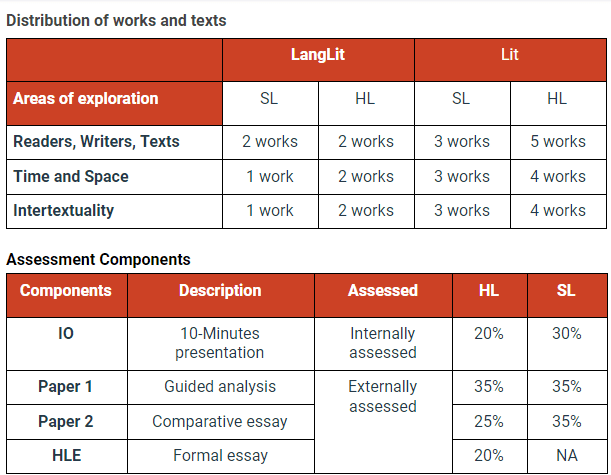
But, before that, let’s understand the collective importance of both these subjects. Both LangLit’s and Literature’s main aim is to assess and help the student understand the different types of works. Be it fiction, and non-fiction or literary and non-literary. The subjects also help students with language and its tools/devices are used by the writer to bring meaning and effect.
In an increasingly fast-paced academic setting where the syllabi are constantly changing and so are the requirements of universities, English as a subject often gets pushed aside as a wonky piece of furniture. But that’s not the case at all – it is an extremely valuable asset in your curriculum and fine-tunes the art of communication like no other subject would. It also gives huge exposure to prevalent global issues and encourages students to think about their surroundings and be more mindful and thoughtful about them.
Jumping back to the subjects on hand, let’s understand what each of them offers.
IB LangLit
This paper includes the study and analysis of literary texts along with non-literary texts. The latter includes advertisements, music lyrics, campaigns, articles, webcomics, graphic media, infographics, speeches, letters, journal entries, and many other pieces of writing that have a wealth of information to analyze.
IB Literature
IB Literature, on the other hand, focuses mainly on literary works. This includes novels, poetry, short stories, novellas, and drama. This paper encourages the student to write their commentary on the prescribed texts and compare them as per the question.
What’s common between the two?
Both have a Paper 2 Lit component that compares two of the prescribed texts.
What is the difference between the two?
The main difference between IB Lit and IB LangLit is Paper 1: where the former studies literary works only whereas the latter studies literary as well as non-literary texts, as mentioned before.
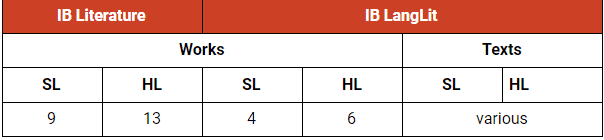
The table below summarises the number of texts that are taught in both subjects:
To put in words, IB Literature has 9 texts in SL (Standard Level) and 13 literary works in HL (Higher Level), whereas IB LangLit has 4 literary works in SL and 6 in SL. Apart from these, various non-literary texts are studied in both SL and HL (Paper 1).
SL and HL
As the name suggests, SL is a less-intensive course for students, recommended to be covered in around 150 hours of instructional time, whereas HL courses are recommended to be covered in 240 hours of instructional time.
Papers 1 and 2
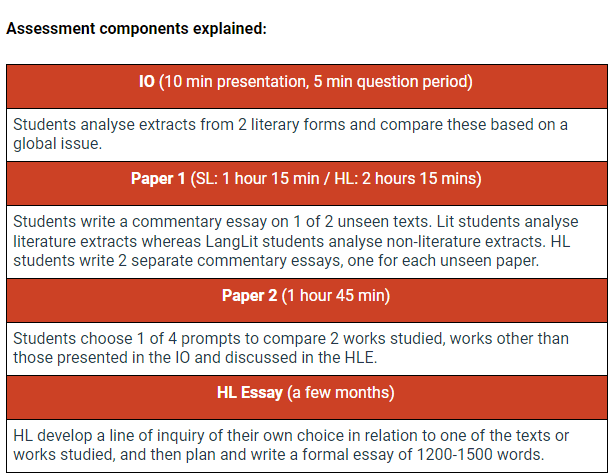
For LangLit Paper 1 is media-based and for Literature it’s a commentary on an unseen poetry/drama/prose.
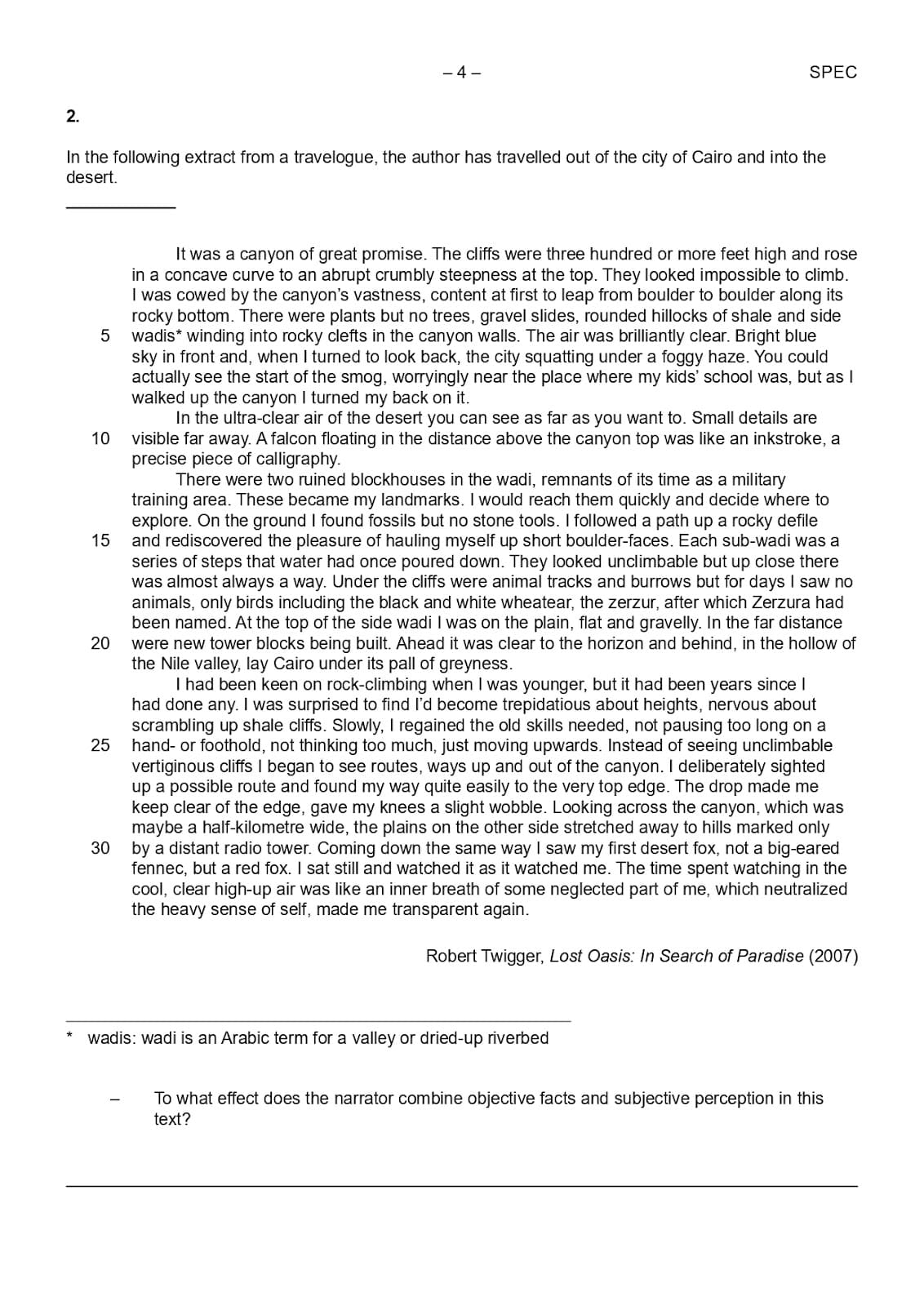
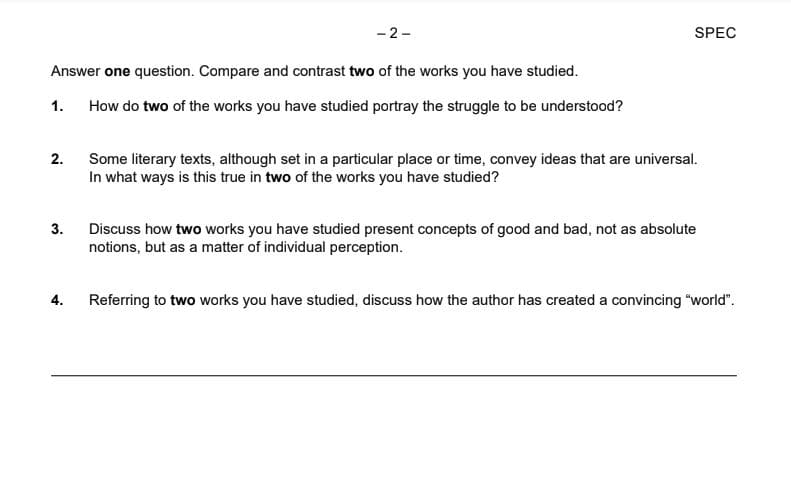
An example of LangLit Paper 1An example of Literature Paper 1
Paper 2 for both subjects is a comparison between texts.
An example of paper 2 for both, Literature and LangLit
LangLit or Literature?
Interest
Literature students analyze literary texts whereas LangLit students analyze non-literature extracts along with literary texts. Even though both of them use the same techniques, the latter focuses on language and how it’s used to convey, persuade, or entertain the reader, whereas the former studies the literary tools, the authorial purpose, and its literary impact. The choice between the two is solely based on the individual and the level of interest one has in the subject.
Do you love reading? If you do, then choosing the Literature paper would be an absolute delight for you, keeping in mind the 9-13 texts and many supplementary readings that you’d require to do for your paper. If you are more intrigued by non-fiction works that concern global and contemporary issues and directly relate to the audience today and have a knack for creative writing, then LangLit seems to be a viable option for you. And, of course, LangLit also has the Literature component so you have the best of both worlds!
Often you may have heard that some students find LangLit easier, whereas some find it a task to write multiple papers since it (LangLit HL) does have more writing to do. But when it comes to the level of difficulty, both are equally demanding in terms of preparation, which is essential for not just your grades but for honing your communication skills for life.
Career Plans
Having said that, let’s look at the larger picture – do you want to practice Law in the future? Or do you wish to study humanities? For those who want to take up Law, HL English Literature seems to be your best bet, giving you a sound understanding of how to evaluate texts and also preparing you for the LNAT in the UK.
For those who wish to study the arts, human sciences, or economics, and build a career on that front, LangLit is the better option for you. It gives you the premise to analyze language and the various methods that writers employ to achieve the desired meaning and effect.
Grade 10 Performance
Did you enjoy your time studying IGCSE literature? If you did, then SL literature seems to be suitable for you. On the other hand, if you struggled with it then LangLit could be the easier alternative. Furthermore, if you’re taking English under duress, then SL LangLit is the safest option of all 4 (SL/HL Lit/LangLit).
Ultimately, the decision to choose either can be made only by you and what interests you. Having explained the differences between both subjects, we hope to have answered a few questions that you may have had regarding the two and helped you make a decision. Still bamboozled? We offer academic and career counseling – get in touch with us to get the support you need.
If you worry that you’ll not be able to memorise or grasp the entire syllabus in time for exams, this blog post is for you. Effective note-taking is a process of consolidating useful information in a manner that can be easily deciphered. It helps in the strategic storage of information that is presented to us in different situations. Whether you are in a classroom setting, trying to absorb all that is being presented by the tutor or you find yourself in the middle of a solo study session, making notes will help your brain process and remember information in an efficient way. Listed below are a few methods which will help you ease into this process, especially during the exam season.
1. The Cornell Method:
This technique relies on summaries of the course material. Whenever you listen to or read new lessons, you should note down the key points and later construct them into a precise summarization of otherwise lengthy content. You can become creative in this method by using easier versions of complicated words and phrases. This method is beneficial when it comes to remembering the major concepts and themes of the subject matter. Along with that, it’ll help you revise easily.
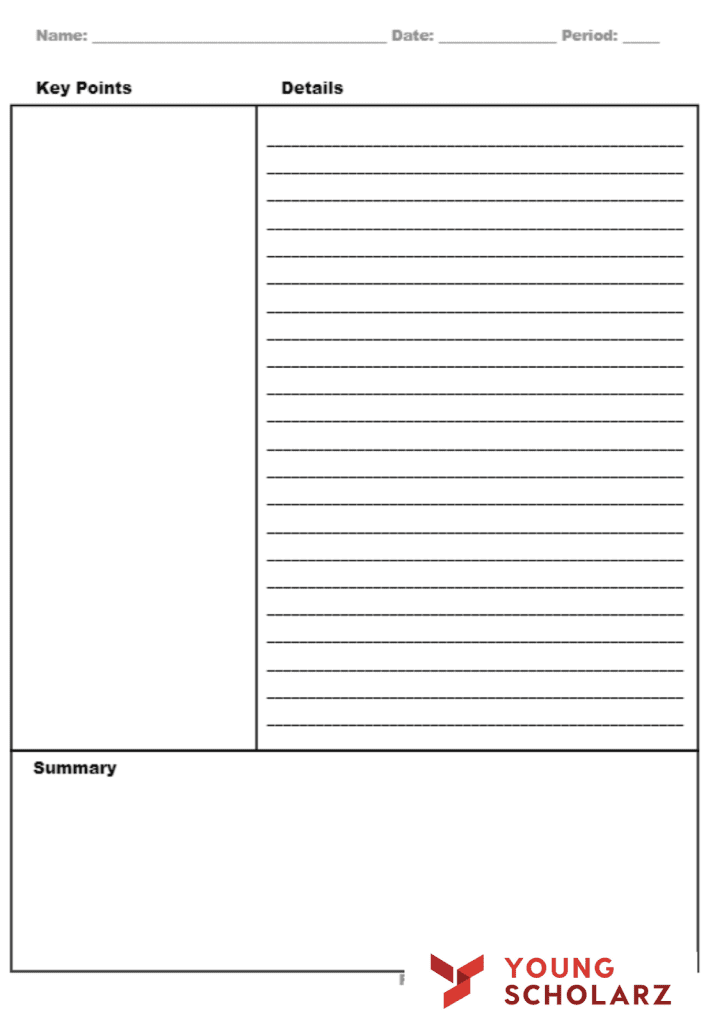
To apply the Cornell Method in your routine, divide a blank sheet of paper into 3 sections: a 2.5” margin to the left, a 2” summary section on the bottom, and a main 6” in-class note section. Use the main notes section to take notes during class, the cues section to review your notes, and once you’re done with the class, write down things you’ll need to remember and a prompt for each. You can also use this section for vocabulary words and study questions. In the summary segment at the bottom, write a summary of your notes. This is where you will highlight the main points. Given below is a skeleton structure of the method which will help you to put it to execution flawlessly.
Template for the Cornell Method
2. Mind Mapping
Mind Mapping is one of the most visually efficient ways to memorize a range of complex data. They are an academic tool that helps pupils utilise their cognitive abilities to the maximum. As opposed to linear notes, mind maps are visual structures of information that allow you to see the big picture (how all the different ideas are connected to one another). They are used as a study aid to help clarify thoughts, determine relationships, simplify complex ideas and memorise information.
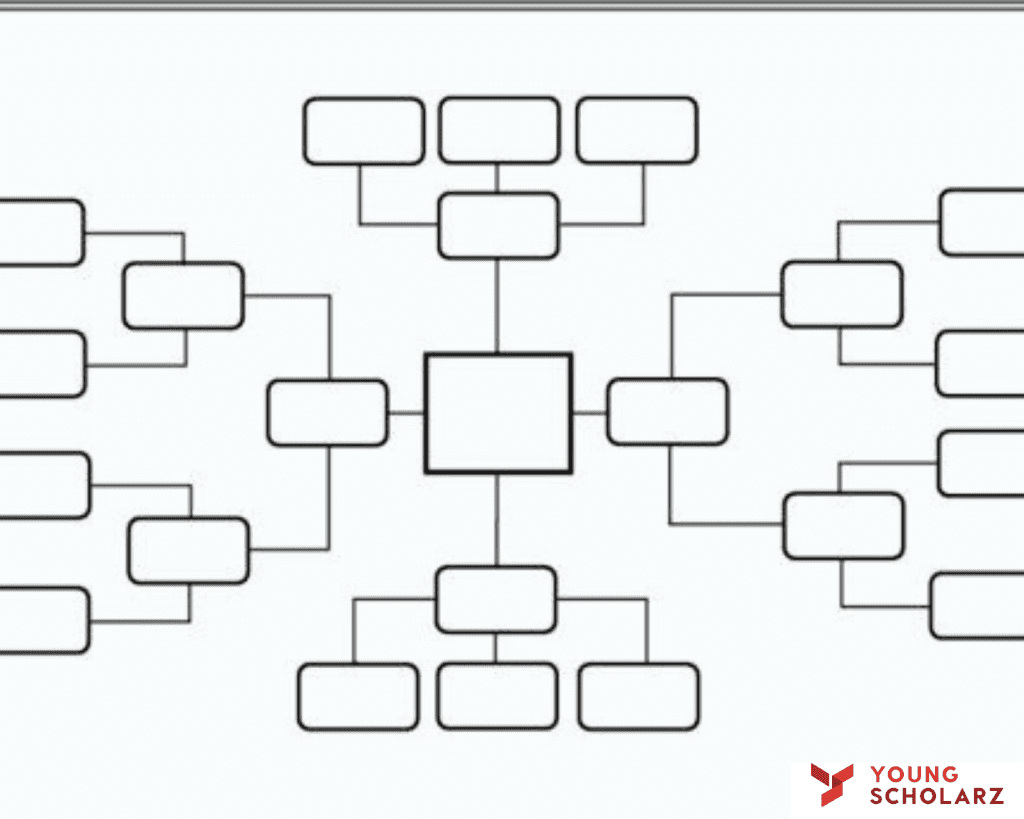
In order to create a mind map, start with a specific concept that you want to learn. Place the center of a sheet and branch shoots from it, each noting a word or a phrase relating to the main topic. More branches sprout out from them adding more information to the primary concept till the point of completion. The sub-branches will contain detailed pointers for overall understanding. This helps develop and elaborate on the overall theme of the mind map. Including images and sketches can also be helpful in brainstorming and creating the sub-branch topics. Mind maps can be created on paper or on a computer with mind mapping software such as Bubbl.us and MindMeister which allow us to edit as we create. Feel free to download the template below and use it as per your needs.
Template for Mind Map
3. Outlining Method
This technique is famous for its simplicity and speedy execution. However, dash or indented outlining is usually not recommended for certain subjects like physics or math. The information which is most general begins at the left with each more specific group of facts indented with spaces to the right while the relationships between the different parts are carried out through indenting. This method is not complicated as there are no numbers, letters, or Roman numerals needed.
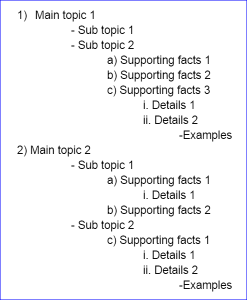
To use this way of note-taking, listen/read and then write in points in an organised pattern based on space indentation. Place major points farthest to the left, and indent each more specific point to the right. Levels of importance will be indicated by distance away from the major point. Indention can be as simple as or as complex as labeling the indentions with Roman numerals or decimals. Markings are not necessary as space relationships will indicate the major/minor points.
Example of the Outlining Method
As you cruise into the exam season, knowing how to make concise notes will help you grasp and revise the subject matter effectively and efficiently. Young Scholarz offers exam-based intensive revision classes for all IGCSE and IB subjects and can help guide you with effective subject-specific study techniques to help you score excellent grades. We hope this blog post helps you in your exam-prep journey. Reach out to us via email, or social media, or register for a class to have a great learning experience!
Let’s face the elephant in the room: Studying is boring. Whether you’re an IGCSE student or an IB student, it is.
The moment you open your book your hand automatically reaches out to grab the phone and check for notifications. Opening Instagram or Twitter is an involuntary action and we’ve all been there. Anything and everything suddenly becomes much more interesting than the chapter on Fuel and Energy.
But whether you like it or not, you have to study. Being an activity that requires you to sit in one place and read material that’s not half as interesting as that young adult fiction you just purchased is a task that you have to motivate yourself to do. But this is essential for impressive grades and building your career. As Zig Ziglar has said “People often say that motivation doesn’t last. Well, neither does bathing—that’s why we recommend it daily.” So you ask, how can one possibly make this mundane experience an enjoyable one? Read on to know!
Music Makes Everything Better
Music is the chocolate chip in your cookie, making everything better. Be it school, university, or an internship in a magazine, it helps you get into work mode and focus with much ease. Set up a study playlist when you sit down with your books. It can literally jazz it up and make it a less boring experience.
Note: You need to make playlists in advance so you don’t browse around for music while you’re studying and break the tempo.
Associate different playlists with different subjects – this helps you get into the right study mood for that particular subject. Also, you want to make sure that you don’t play the same music for times when you’re not studying – you don’t want to remember the Pythagoras theorem while trying to get some sleep!
Here are a couple of recommendations for you to add to your playlist:
Staring at the same wall while you’re at your desk can become mundane for your study routine. Alternate between the rooms you’re studying in and to literally “get a breath of fresh air”, get out of the house! Find a nearby green space and seat yourself on the bench, or head to the nearest cafe where you can sit for a few hours and focus on the subject at hand.
Having a mug of your favourite cinnamon tea by your side can also lift the environment and your spirits. Tea being an energizing drink makes sure you concentrate on the literary devices we keep telling you to write! And do anything but study on your bed! We’re all guilty there, and it may give you a great snooze experience as you snuggle up with your textbook but won’t help with your grades.
Actively engage yourself
At Young Scholarz, this is one thing that we reiterate time and again. Make mind maps for the topic that you’ve taken on. Form tables, branches, diagrams – anything to jot down important bits of information in a hierarchical format. What mind maps do is help you to make visual connections that you can easily draw upon in an exam and under pressure. Along with mind maps, the Pdf element is an app that helps you edit pages from your textbook, simply by uploading scanned pictures of your textbook. Once it’s done, you can change the text, summarise it and annotate as you go. Editing text from the page itself aids active engagement and helps you to retain information better, much as you do with mind maps.
Make a study buddy
“You are the average of the five people that you surround yourself with.”
Though this is common knowledge, it is still very true and very relatable. Surround yourself with people and friends who equally care about education and have similar goals as you do. This can mutually motivate you and your friends through active participation and encouragement. If you’re comfortable with the idea, form a study group with them. This could introduce you to new methods of learning and strengthen the drive to study. Learning with one or more friends also builds your personal skills – you can ask questions, develop conversations, debate, and discuss the material that you’re studying. But, group study is a two-way sword. Being beneficial, it can also get you distracted and reduce your productivity. If you’re dedicated enough, this would be less of a distraction and more of a progressive approach for you.
Make it visual
The main purpose of a textbook is not to entertain you, but to educate you – this purpose makes it one-dimensional and doesn’t always pique your interest. But videos on YouTube and any visual content online help to fill that gap and make it multi-dimensional, keeping you hooked on the screen. Reading as a hobby is threatened by OTT (Over The Top) platforms and social media that spoon-feed the brain with information, seldom encouraging you to stop and think on your own. We must use this medium to our own advantage – a complex concept in text form is made much more digestible in video form.
Keep in mind to take notes of important points while watching study videos – if you don’t actively engage in it, you cannot retain information and this entire practice would be futile. Points that confuse you can be researched upon from your very own textbook. Make them a team!
Reward yourself
There’s no sweeter treat than the one you’ve earned. Set yourself some goals and reward yourself for the achievements you make. It could be a scoop of chocolate ice cream, a pizza slice, or even an episode of your favourite Hulu show. Set realistic goals that are achievable and don’t stress yourself out before you’ve even started! If you’re not able to finish the tasks set for the day, there’s no need to panic about it. You can always continue them the next day and not add on any new tasks for that day. Not finishing a goal does not account for failure in any way.
And lastly… Go out and have fun every now and then! If you study hard, you will enjoy hanging out with your friends even more. Too much studying and too much fun are both a recipe for a spoilt dish, so make sure to balance them out and you may do just fine.
Is it even possible to score a Perfect 800 on your SAT English? Does an 800 on SAT Math sound more doable than the English section? It might sound like an impossible dream to achieve, but everything is possible with the right guidance and skills. Armed with the right tool kit, everything is possible even if it takes months of preparation and several attempts. Whether you’re a first-timer or a 4th, the pressure is intense and increases with SAT fatigue. Fret not, these strategies will help you get a grip and equip you to go forth in your battle to ace the SAT English section.
But, how important is your score and why are we aiming for perfection?
Even though most top-tier colleges will accept you with your 1550 score, getting a 1600 and above naturally improves your chances of getting in. Plus, if it’s possible, your goal should always be to give tasks your 100% and try your very best. SAT English is divided into two sections: Reading and Writing. These strategies we’re sharing work for the reading, as well as the writing section. You may want to grab a Moka pot because this is going to be a long read.
READING
The SAT Reading Test is designed to measure how well you read and interpret different texts that you would come across in college as well as in your career. All the questions are linked to passages from engaging published works. You have 65 minutes to read the passages and answer 52 multiple-choice questions. One passage is derived from a work of fiction, and the remaining are informational, and based on topics like freedom, justice, and human dignity. Each passage will tell a story, make an argument, or explain a study/experiment. The passage ranges in complexity from Grade 9 to the first year of college.
The questions on the reading test are of 3 main categories:
Information and Ideas – Questions focusing on what the passage tells you in a direct/indirect way.
Rhetoric – Questions that ask you to think about how the author brings forth his/her meaning.
Synthesis – Questions that ask you to make inferences and line the dots from the content provided.
WRITING AND LANGUAGE
The SAT Writing and Language section tests your skills and knowledge to revise and edit passages. You have 35 minutes to read 4 passages and answer 44 multiple-choice questions. All the questions are related to the passage and are focused on specific grammar rules, so don’t worry about requiring any external knowledge.
There are two categories of questions
Expression of ideas – here you’ll be asked to improve the development of the topic, organization of the information and ideas, and the effectiveness of the language.
Standard English conventions – Questions of this type ask you to recognize and correct errors in sentence structure, grammar, usage, and punctuation.
Some passages will make use of tables, graphs, or charts. The questions may ask you to use the graphic provided to correct an error in the passage or replace a vague description in the passage with a more precise one. The passages can be more than a page long, so always check before jumping to the questions.
Read the blurb
The blurb to the passage is often skipped while reading, but we strongly advise that you read it first. Read it and consider it as a freebie. It may even contain the answer to a question that asks about the main point of the passage. For example, look at the picture above. You can get a question like “In what context was the speech delivered by Barbara Jordan?”, to which the answer is directly linked to the introduction provided in this picture.
The correct passage reading strategy
You’ve been taught different methods of approaching comprehension in school. This is where you may need to begin to unlearn things. Since you don’t have the time to read in detail, skim reading using the back of your pencil is the way to go! To do this effectively, practice skim-reading newspaper articles. Reading the questions first and then answering is also a tried-and-tested method to score. It saves a lot of time and one can skip lines in the passage that aren’t quizzed upon.
Showing interest in the passage content
If you are in a position to feel that your life depends on your SAT score, then you need to act like it does! Be interested in the passage as much as you’d be interested in that double chocolate sundae with sprinkles on your cheat day!
We know the topics might not be riveting or mind-blowing but you don’t have the luxury of enjoying them. So focus your attention and try to understand what the author is trying to say and what their opinions are – trust us … this is going to help with answering the questions.
The science ofdeduction
Sherlock isn’t the only one who holds the patent for the deduction; this strategy applied with reasoned thought will work. All answers may be correct – the questions are designed to confuse you, but SAT will always ask for the Best one. There will only be one perfect fit when looking for THE answer and this will be evidence-based so that you can’t challenge it. When the options all seem like the right answer, and they might be, cover the answers, think like Sherlock for the evidence, and come to the evidence-based answer. Do not waste time eliminating answers one by one, come up with your answer, ensure you can support it from the text, and then aim and fire with confidence.
To go faster you must slow down
You have 1.25 minutes per question – that is approximately 12.5 minutes per passage. Practice papers under timed conditions so that you know you can comfortably succeed. Do you usually rush through things and end up getting answers wrong? Don’t try to race against the available time. Accept, practice, and master the art of calmly working through the paper: Your speed will automatically improve with every practice test. Make it your goal to finish the test and have extra time left over to review your answers. How do you do that?
Finish with extra time and double-check
By skim-reading effectively, you should be able to read a long passage within 1 minute.
Each question shouldn’t take more than 1 minute
This leaves a comfortable minute or so to revisit those challenging questions
Never leave any answers unmarked – circle any guesses on the exam paper so you know what you need to go back to.
Recheck your answers, but only revisit the ones you were unsure about.
Pro-tip: don’t bubble the answers question by question. This wastes a lot of time as you juggle between the two sheets, ending up distracted. Instead, tick all your answers in the question booklet, and then head over to the answer sheet to bubble. Once again – five at a time.
Check that you’ve bubbled the answers darkly and you have not left any gaps
Practice makes perfect
Always practice hard-copy papers rather than doing them online. Apply all strategies to figure out what works best for YOU. It may not work for someone else but you do you. Know how you should deal with the passage to save time during the actual test. And that takes practice.
Paying close attention to your mistakes
This is where most of us lose out on precious points. If you want a perfect/near-to-perfect score, you need to make sure that every single one of your weak points is covered.
The first thing to do is to simply practice – TONS of practice.
The second thing to do – the most important thing – is to understand your mistakes. Why did you miss that question? What held you back from answering correctly?
Review all the wrong answers and work on them. If you don’t improve on your mistakes, you’re simply going to repeat them over and over again. It would be frivolous to even practice if you don’t identify the issue.
Identify your challenges
Do you find it a chore to manage time? Do you spend hours reading and rereading texts? Before you begin prepping, it will help to know where you stand and work on those weaknesses.
The SAT has an element that is US-centric – take time to know the key dates in American history and the tenets of the Constitution.
Only attempt an SAT Practice Test once you have been taught techniques. Practicing blindly is fruitless.
Only practice on hard copy tests – that best mimic the exam itself
Practice papers to master strategy – then apply the time pressure. Don’t try to master both skills at the same time.
Become aware of your strengths and weaknesses and work on them, not necessarily just practicing paper after paper.
10. Keep on moving, don’t stop…
The reading sections are challenging, particularly the double passage. No matter how you feel you are doing, just go forward at a calm and steady pace. Even if you feel you misunderstood a passage or had to guess some answers, don’t let that dishearten you and dampen your hard work. The paper can always be done again … at this moment, do your best, move on, and continue with the rest of the passages. This can happen whilst practicing, or even during the real SAT. Life goes on, and the only way is to move ahead.
Preparing for your SATs is an important step on your ladder to university education. Make use of the strategies to perfect your SAT English score and you’ll be closer to that 800!
We often overlook the skills we have honed at some point for simple tasks such as brushing our teeth or slurping ramen with chopsticks.
For most of us, reading and writing in English, too, has been ingrained from an early age and we take these skills for granted. But imagine a life where you didn’t quite understand the language. What would you do? How would you read directions on a street sign? Or, an urgent storm announcement in the news telling you to stay indoors? Most importantly, what about Netflix?
It’s actually only when you are not a native English speaker, that you become acutely aware of the many obstacles that come in the way of fluency and the fundamental nature of English being a universal language that is crucial for globalisation and assimilation. Let’s consider a little more deeply the importance of reading and writing in English, specifically the essential domains of Speaking, Listening, Reading, and Writing.
Builds your soft skills
Writing is a crucial process that is challenging for both native as well as non-native English speakers. It involves a focus on content, organisation, purpose, audience, vocabulary, punctuation, spelling, and coherence. It also encourages thinking and learning, motivates conversation, and helps to lay out well-rounded thoughts for reflection. In a world of texting and messaging, writing is increasingly fundamental in our communication with others. It helps us to organise and refine our ideas by doing an internal edit of words and phrases by filtering and adjusting language to ensure a flawless delivery on paper or on a digital platform.
Reading and writing when practiced hand-in-hand, polishes our speech skills by improving the ability to construct and structure sentences as we jot them down. Writing practice also enriches our vocabulary as we try to use different words to avoid repetition. For these reasons, this has a positive effect on our soft skills too, aiding in university admission or a simple class presentation.
Reading improves writing skills
This goes without saying, but the more you read, the better you will write. Have you ever come across a person in the writing field who doesn’t read? It’s rare to find such a jewel who writes without being an avid reader. The benefits of reading are endless – you learn to use different methods of writing, with the use of better vocabulary as well as new ideas. Many novels and short stories are inspired by other novels and short stories. Browsing through any information helps stimulate the mind and can even trigger your imagination. Read and learn from the masters!
Improves your vocabulary
Reading newspapers, magazines, and novels teaches you not only language and grammar structure, but also exposes you to a myriad of words that you may previously not have heard of. And if you’re new to English, then picking up a newspaper or a simple book in English will do you wonders.
Despite this, learners of English still find the vocabulary to be one of the most challenging aspects. It is a complex language, you will come across many homophones. For example, look at ‘elevate’ and ‘alleviate’ – these words sound similar when spoken aloud but mean the complete opposite of one another. One way to combat this is to read as much as you can – repeated reading helps you to identify the contextual meaning of words. None of us can avoid the need to read effectively and understand the written word.
Aids you to explore and expand your horizons
Do you find yourself interested in the history of science and how it made its place in the world? Or are you into the current shift in diet to vegan and gluten-free foods? Being up-to-date with either of these requires a great deal of research that involves reading. To exemplify, having an inquisitive mind, you may want to look up omultiple platforms that speak about scientific fossils. You may even want to publish your own blog where you’re tracking your day-to-day nutrition and meals that support veganism. Both these mediums of reading and writing will help you embark upon a journey towards new knowledge. Exploration of new research areas will certainly help you increase your knowledge base, as well as create new space for more exciting information.
Helps you understand the beauty of language better
Just a few simple words can change the mood of a person. It can also affect your outlook on life, and soothe you in pain. Reading a nonfiction text, or a fantasy novel transforms you to a world outside your own. English classics like Emily Bronte’s Wuthering Heights, gothic novels like Mary Shelley’s Frankenstein, and the more contemporary Ikigai by Hector Garcia – they all help you understand not just the beauty of language but also the impact it has on you.
Apart from reading, the act of writing also helps you embrace the language. Your mind works out different ways of putting words to good use. Every person has their own way of speaking, and writing being one’s way of self-expression makes every human being unique. You take this understanding with you wherever you go – as a student in a foreign country or as a new recruit in a company.
Gives you better opportunities
The more you read and the more you write – the better you get at this wonderful language. Reading helps you write better, and universities look for applicants that have a strong command of the English language. When writing a university essay, it is your finesse and fluency that makes or breaks the deal. Content is important but it only has an effect when it is written in the correct way.
Tests such as the TOEFL assess your reading and writing skills, on the basis of which many universities and colleges accept your application. If you perform well it increases your chances of getting into a well-reputed university, indirectly giving you better career opportunities as well as improving the quality of life.
“ According to the 2007 NEA study, nearly two-thirds of employers ranked reading skills as “very important” for high school graduates, and more than a third found that their applicants were deficient in their reading ability.”
So to sum it up – all your time spent on reading newspapers and writing essays for your school paper gives you ample practice in the English language. Children who love to read find school more enjoyable and literary readers are more likely to engage in community events than non-readers. Your ability to comprehend and converse well brings you closer to a global community and gives you a winning edge in various areas of life.
A good educational experience plays a pivotal role in a modern human being’s life. Examinations always come with a certain level of pressure. In many cases, this becomes a source of inspiration for people. However, we must keep in mind that this pressure can also lead to significant stress in students. As exam season is on the horizon, it is normal to feel a little jittery or frazzled. However, staying in a state of stress and not making an effort to resolve it will only make situations worse. One must work on indulging in practices and daily habits that will aid in staying calm, focused, and grounded. That’s the right state of mind to ace the final exams. Listed under are some methods you can use to manage exam stress.
Don’t take a full night’s sleep lightly.
It is okay to have a messed up sleep schedule when you are a teenager, but what we are unaware of is that can cause many long-term problems. An eight-hour sleep is something you should not compromise on. The human body has a natural clock system in place called the Circadian Rhythm. This is a phenomenon where we are naturally in tune with the rising and setting of the sun and our energy levels stay accordingly. Even when exhausted, many youngsters struggle to fall asleep at night. Stress and your mobile phones are the culprits here. If you are in the habit of using your phone at night in your bed, stop it. Screens emit blue light which confuses our brain into thinking that it is morning time and we feel energized, unable to fall asleep. Cut out screen time at least two hours before going to bed. Instead, read a book or do a calming activity like some stretches to get the perfect sleep.
Taking breaks is good!
Sometimes we are so concerned about the upcoming exam that we go into an overworking mode and sit to study for hours. However, due to mental exhaustion, our brain doesn’t process any information that we consume and we end up forgetting it. To break this loop, remember to take mini breaks while studying for long hours. You can explore a method called the Pomodoro technique. Here, you study a concept for 25 minutes, take a 5-minute break, and repeat this process until you finish the subject. The mini breaks are an efficient way to help you de-stress. But avoid using social media during your Pomodoro break time. Try to do other calming activities such as taking a short walk around your room, listening to some music, getting up to fetch some water or lemonade, and other such things.
“The time to relax is when you don’t have time for it.”
Sydney J Harris
Nutrition affects everything.
The saying, “You are what you eat” is indeed true. When we are bloated with junk food, our brain functions slowly and we may even feel sleepy. This leads to a downward spiral of not being able to study and stressing about it later. When our diets are filled with junk food which includes only carbs and sugar, we are inviting doom. Instead focus on a balanced meal that involves fruits, dry fruits, vegetables, and pulses. Such foods give us stable levels of energy throughout the day which is essential for a successful study session. Apart from that avoid sugary and caffeine-loaded drinks at all costs.
Join or make a peer study group.
In moments of stress, it can be difficult to realize the fact that we are not alone. Many of our classmates might be going through the same levels of stress that are exerted by examinations. A great way to overcome this is to communicate freely with our peers and this will help us release some of the pressure. You can arrange group study sessions and give each other company while studying. However, all distractions should be avoided in group study sessions and a predetermined task must be completed by the end of it. Parent supervision is also necessary to keep you grounded in your studies and from being distracted.
Ask questions and clear your doubts.
Some topics and subject matter can be complicated and confusing. But with correct guidance and support it can be easily understood. Continued lack of clarity in a subject leads to brain fog and stress. This should be resolved by trying to get a clearer idea of the topic we are focussing on. Don’t back away from seeking academic help where you feel the need to. Joining the Young Scholarz exam prep class which is exclusively curated to help you through the exams is an excellent option.
Furthermore, the most vital thing to do is to believe in yourself. When being constantly faced with new challenges, we often forget to look back at how far we have come and how much we have already achieved. Given that you have prepared well, there should be no reason for you to worry. Therefore, when experiencing a negative thought, try to replace it with a positive one. For example, instead of thinking ‘If I don’t get at least 95 marks, I am a failure’, think ‘Whatever I get, I will be proud of myself and value how much I have already achieved’. You can do this!
“It’s not stress that kills us, it’s our reaction to it.”
Hans Selye
Hola! Annyeonghaseyo!
These are just a couple of the most popular ways of saying hello in Spanish and Korean, respectively. However, in all honesty, if you have gotten on the BTS bandwagon, or sung to the tunes of Bella Ciao, then you have learned much more than just the greetings in these languages by now! Learning a foreign language is useful for watching television shows and listening to exotic music. It has many more benefits beyond the realm of entertainment.
Shows like Emily in Paris convey how the French dislike it when you fail to speak their language in their country.
Although universal stereotypes might often point toward France as being Europe’s “most arrogant” country, the emotion is valid across every culture. Speaking the language of a foreign country will not only help you communicate with ease but you will also be welcomed with more warmth by the locals at the receiving end.
It’s not just about how you’re perceived and received; learning a foreign language shows your willingness to be part of a global community. As a bonus, it also increases your chances of attending academic and professional interviews by a good number! Read on to find out the many benefits of learning a foreign language.
Communicate. Connect.
Speaking with someone in their native language has been proven beneficial in more ways than you can imagine. You not only connect with them instantly – you become a part of their culture. You’re immediately accepted as a fellow local and break the barriers that make you foreign. What’s better? Learning a foreign language opens up a pool of potential amigos, and helps you express your thoughts, feelings, and desires with more ease and confidence.
Employers Love It
Many job applications today prefer candidates who are acquainted with languages more than one. The reason? Because most companies have clients outside their borders. If you can communicate with them in their language, you instantly build bonds that help strengthen company relations. If your resume boasts of fluency in a second language, your chances of employment are more in the marketplace.
It’s not just the ease of communication – knowing another language reflects your hard work and determination, showing that you’ve gone the extra mile to work on yourself and making it your USP. Even if you’ve applied for a small company that may or may not have a foreign client, being bilingual still sets you apart from your monolingual colleagues.
Cultural Appreciation
Studies show that children who learn another language become more open-minded, extend arms toward different cultures, and develop positive attitudes toward them. Learning a new language teaches you about their culture which includes food, clothing, lifestyles, festivals, traditions, customs, and values. What’s better? Breaking language barriers also breaks the prejudices that come with them.
Before you learn another language, it is a must to learn your mother tongue first. Being a crucial part of your identity, you must cherish and embrace it. Eugene Stanton, who has traveled to over 125 countries, has written a book called “Our Beautiful World”. He says, “If we were to lose our tongue, for example, if we were to grow up in a country which is not our own… in my opinion, we would be losing a part of ourselves.”
Learning a new language not only helps you appreciate the essence of their culture but also your own culture. The brain automatically begins to compare and evaluate the positive and negative attributes of your culture and a foreign one. This explains why studying another language improves your reading, writing, and listening skills.
Broader Perspective
There is no limit to attaining knowledge. The more you increase your cultural base, the more you’re able to absorb, and you can look at things with a fresh new perspective. Understanding and appreciating different cultures helps you look at the world from a different perspective. It’s one that you can apply not just towards other people but towards your attitude and your people.
One study in particular was conducted where participants speaking two different languages – German and English – were asked to describe the video clips played for them. One group made a short brief description that was limited and one-dimensional. The other group explained the action in relation to a place or time, thus proving how different languages make you think differently. Now imagine, what if you knew both German and English. Wouldn’t that widen your horizon?
Confidence Booster
Imagine you’re in a workplace outside your country. You don’t speak their language and you always feel like they’re slyly sniggering at you, talking about you, or cracking jokes about you. Even if they aren’t, you feel a lingering shadow of a mockery cloud over you. Fast-forward to the time where you speak their language – wouldn’t you feel confident? You’re no longer in the dark and can join the banter. Which scenario seems ideal to you? The second one, we’re sure!
The mastery of a new skill like learning a new language is one of the most effective ways of improving one’s self-confidence. It forms a link between you and new people with which you can form a lasting friendship. You don’t feel judged because you’d be appreciated for your efforts at conversing with them. It means you’re stepping outside your comfort zone and you’re putting yourself out there.
Improves Cognitive Skills
Your language skills are key to your mind and they reflect your cognitive abilities and functions. Studies show a positive correlation between the length of time devoted to learning a language and cognitive development. Learning a second language teaches your brain to analyze and process different linguistic structures. This skill can be applied to learning any language – your brain identifies techniques behind learning a language and breaks them down into a series of steps.
While acquiring a new language, your brain retains muscle memory. It will understand how different languages are structured and increasingly become aware of syntax, grammar, and sentence structure. These are what makes a language unique. Your brain experiences mental benefits from controlling languages the same way your body benefits from physical exercise. Your mental flexibility plays a big role in the later stages of your life, as bilinguals and multilinguals experience slower cognitive aging, and, as research tells us, debilitating conditions such as Alzheimer’s can get delayed by 5 years at least.
Higher Attention Span
Not only does a new language improve your memory but it also improves your attention span, thereby challenging you to focus and develop problem-solving skills.
Toggling from one speech to another encourages your multitasking skills, and being bilingual, you tend to score higher on standardized tests than monolingual students, especially in subjects that involve vocabulary, reading, and maths. Bilingual people tend to be more logical, and rational, develop better decision-making skills, and have a better perception of their surroundings.
Builds Creative Thinking Skills
Imagine talking fast in your native language – you can’t remember that one word – instead you replace it by lending a word from another language. If you’re Ross from Friends, you’d probably make a mess of the meaning! But otherwise, it adds a touch of creativity and exoticism to your speech.
This helps improve your skills in divergent thinking, in turn increasing your ability to identify multiple answers and solutions to a problem. Multilingual speakers are also more creative than the monos, according to researchers. Psychologist Anatoliy Kharkhurin has even authored a book called Multilingualism and Creativity, in which he explores the relationship between the two. Studying a foreign language not only improves your ability to solve problems and think more logically but also encourages you to experiment with new words and phrases.
Remember – no matter how old you are, you can always begin a new language-learning experience that helps you grow as a person! Perhaps, even inspire someone else to do the same.
If you’re looking to learn French, Spanish, German, or Hindi we have excellent language teachers who can guide you! Please get in touch.
Ready to start your lifelong journey with us?
We guarantee an improvement in grades, with most students improving by an average of 2 bands.